
This article was selected without issuer payment or pre-publication approval and prepared under Cornerstone Market Intelligence editorial standards. The source material used is linked on this page.
- Appia identified six additional preliminary uranium drill targets from Lines 1 and 3 of its Otherside magnetotelluric survey, expanding a broader target inventory ahead of planned 2027 drilling.
- Appia Rare Earths & Uranium identified six additional preliminary drill targets at its 100%-owned Otherside uranium property in Saskatchewan after final interpretation of magnetotelluric survey Lines 1 and 3.
- The newly highlighted targets are P-02, P-04 and P-06 on Line 1 and P-13, P-14 and P-15 on Line 3. Appia says the broader property now contains a 16-target inventory when combined with previously identified targets, including the Line 2 corridor that has been a central focus of recent interpretation.
The development
Appia Rare Earths & Uranium identified six additional preliminary drill targets at its 100%-owned Otherside uranium property in Saskatchewan after final interpretation of magnetotelluric survey Lines 1 and 3.
The newly highlighted targets are P-02, P-04 and P-06 on Line 1 and P-13, P-14 and P-15 on Line 3. Appia says the broader property now contains a 16-target inventory when combined with previously identified targets, including the Line 2 corridor that has been a central focus of recent interpretation.
The target selection is based on a combination of conductivity, density, magnetic response and interpreted structural disruption. Those features are relevant to Athabasca Basin uranium exploration because mineralizing systems can be associated with faults, unconformity offsets and alteration pathways, but geophysical anomalies are not confirmation of uranium mineralization.
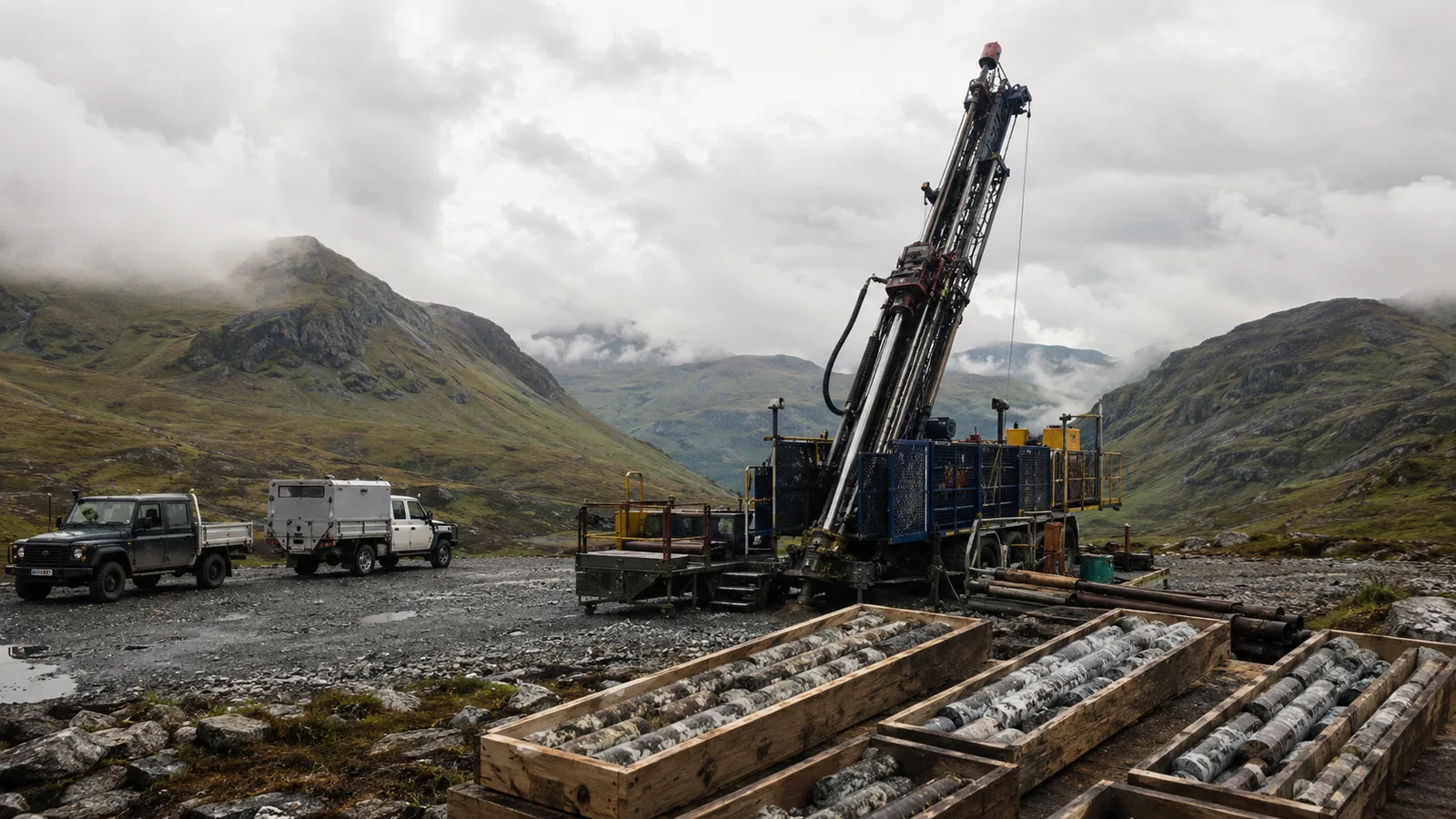
Appia plans tighter-spaced ground magnetotelluric work and ambient-noise tomography over its priority Line 2 corridor before moving toward precision diamond drilling in 2027. The additional survey work is intended to sharpen the geometry of the interpreted conductor break and structural setting before expensive drill testing begins.
The result is a larger and more structured target pipeline rather than a discovery. That distinction is important: the current value of the update is in reducing geological uncertainty and ranking drill locations, while the discovery test remains dependent on future drilling and assays.
Why this matters
Expanding the target inventory gives Appia multiple opportunities to test the Otherside conductor system rather than relying on a single geophysical anomaly.
The program is still pre-discovery, so the key value inflection point remains drill confirmation of uranium-bearing geology.
Industry and company context
The Athabasca Basin hosts some of the world’s highest-grade uranium deposits, which makes structural and geophysical targeting particularly important for explorers operating under sandstone cover.
Appia also holds rare-earth and uranium interests elsewhere, but Otherside is being advanced as a focused Saskatchewan uranium target.
How to evaluate the update
Readers should track whether the planned 3D MT and ambient-noise tomography surveys materially improve target definition before drilling.
Once drilling begins, alteration, structure, pathfinder geochemistry and uranium assays will matter more than similarity to conceptual deposit models.
Execution and risk considerations
Geophysical anomalies can be caused by non-mineralized geological features and may fail to produce economic uranium intersections.
The planned drill program is still future work and remains subject to funding, permitting, logistics and technical refinement.
What to watch next
- Completion of high-resolution MT and ambient-noise tomography.
- Final ranking of the 16-target inventory ahead of 2027 drilling.
- First drill results from Otherside.
Cornerstone perspective
Appia has moved Otherside from a broad conductor concept toward a more disciplined target inventory. That is useful exploration progress, but it is not yet a mineral discovery.
The next phase should be judged by how efficiently the company converts geophysical interpretation into high-quality drill tests and, ultimately, geological evidence.
This article is informational and is not investment advice or a recommendation to buy or sell securities. Forward-looking statements involve risks and uncertainty. Readers should review the original source and report factual concerns through our corrections page.