
Editorial analysis based on publicly accessible cited materials. No issuer payment or editorial approval.
- Headline grades attract attention, but an assay result needs geological context before it can support a broader investment conclusion.
- Background documents and the original source are linked below.
The development
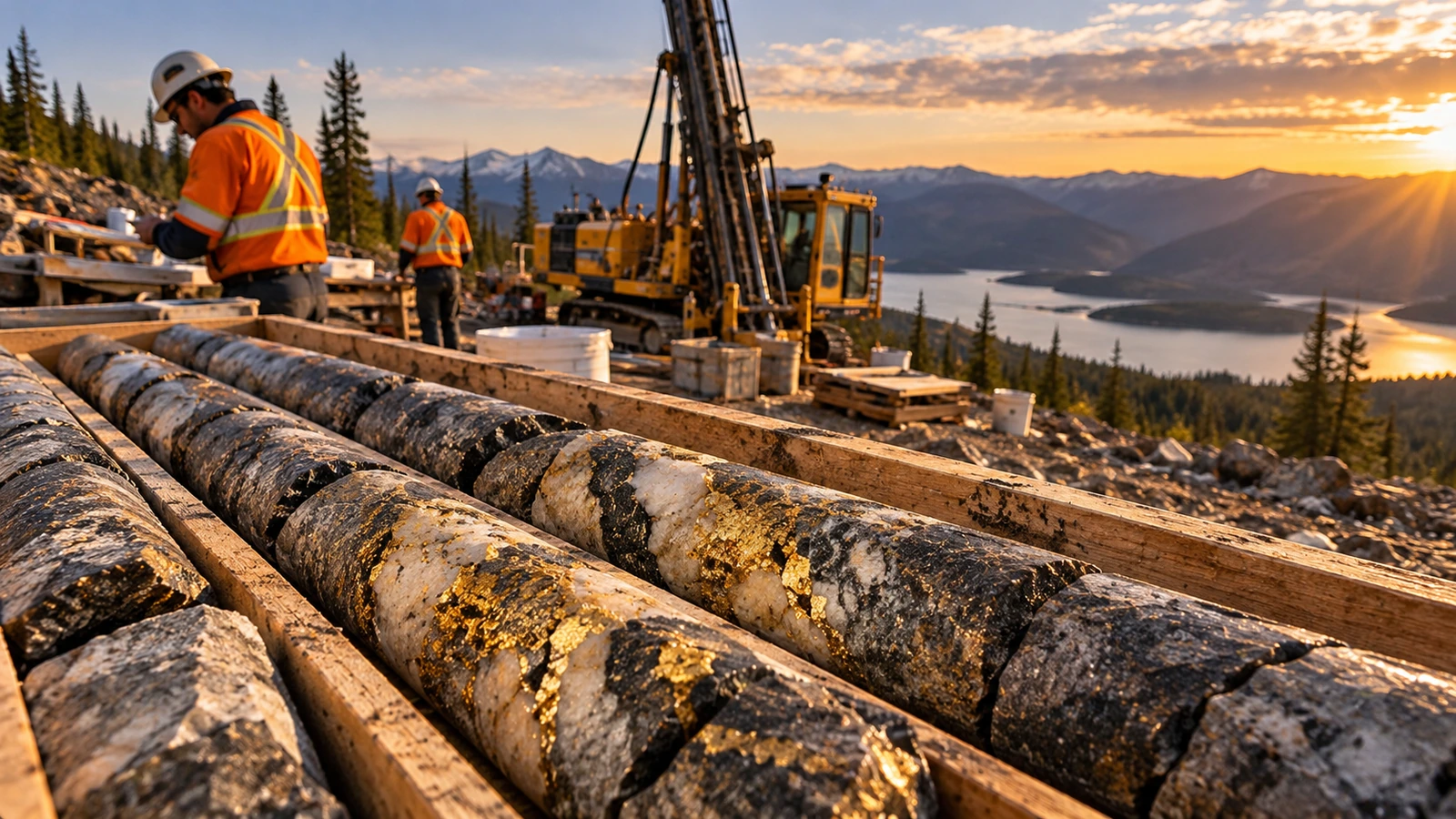
A drill interval describes the mineral content measured along a section of drill core or another sample. Grades are commonly expressed as grams per tonne for gold, while reported widths describe a measured distance in the hole.
A long interval with moderate grade and a narrow interval with high grade can represent very different geological and mining possibilities. Comparing them requires attention to rock type, continuity and where the results sit within the deposit model.
Why it matters
True thickness is especially important. An angled drill hole can intersect a steep vein obliquely, producing an interval that is longer than the actual thickness of the mineralized body.
Cut-off grades, sampling procedures, quality control and the treatment of exceptional assays can also affect the interpretation. Readers should look for maps and cross sections, not just a table of highlighted intercepts.
What investors should examine
Early drilling does not automatically establish a mineral resource or a reserve. Repeated intersections, geological modeling and appropriate estimation work are needed before scale and economic potential can be assessed reliably.
Canadian mineral disclosure rules, including NI 43-101, provide a framework for technical reporting. Investors should examine the original technical documentation and qualified-person statements whenever they are available.
Source and next steps
This report draws on Canadian Securities Administrators, NI 43-101. The source provides the primary context; subsequent filings and disclosures may change the picture.