A detailed review of the business, leadership and publicly reported progress. Sources checked September 5, 2026.
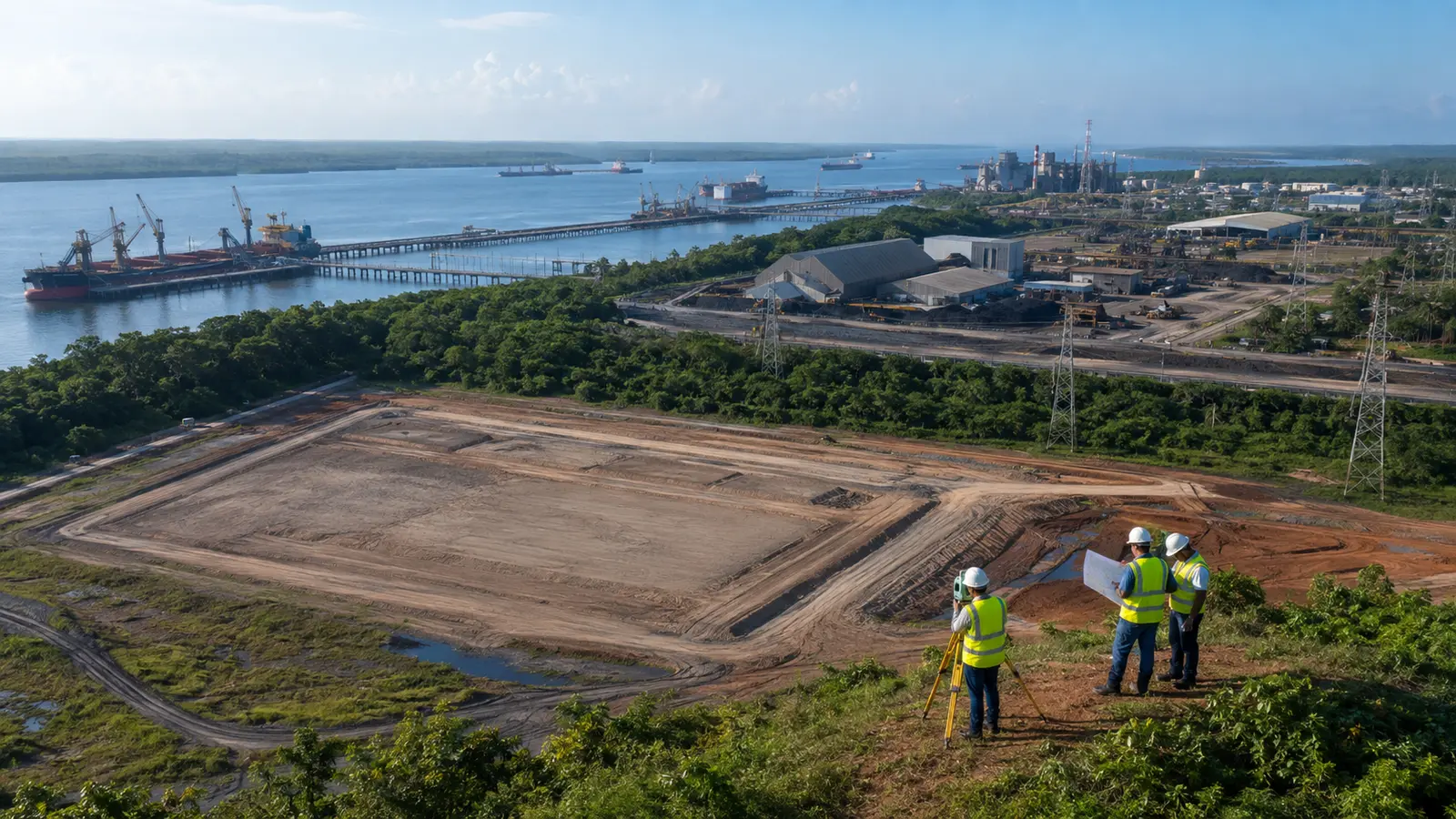
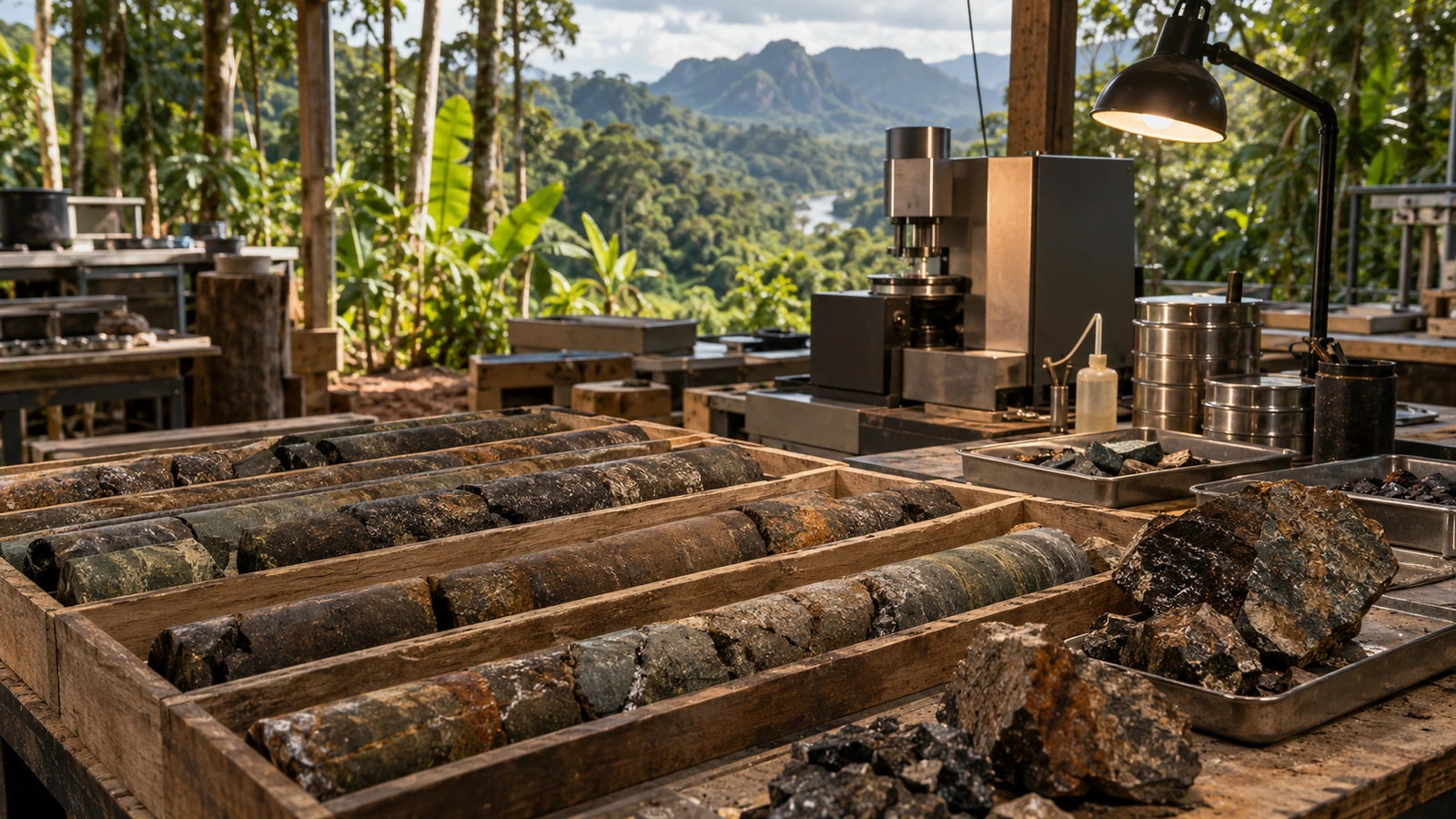
Conceptual editorial illustration; not a photograph of company assets or personnel.
- Luanga combines platinum-group metals, gold and nickel in Brazil’s Carajás region.
- Resource classification and metallurgical testing provide separate measures of technical progress.
- Barcarena adds a framework for evaluating a future domestic processing option.
A mineral project with several connected value drivers
Bravo Mining is advancing the Luanga platinum-group-metals, gold and nickel project in Brazil’s Carajás Mineral Province. Its core business is mineral exploration and development, with work extending from geological definition into processing studies and evaluation of a possible domestic downstream route.
The company also identifies a copper-gold exploration opportunity alongside its core Luanga resource. These activities offer different ways to build the technical understanding of the wider property. The central project remains Luanga, supported by a growing body of resource and metallurgical work.
The useful company-level question is how those activities fit together. Resource information establishes the mineral inventory, metallurgy tests potential recovery routes, and infrastructure and processing studies inform future development choices. Bravo’s recent updates provide detail across that sequence.
Sources: [7]
The resource base has gained scale and confidence
Bravo’s 2025 Luanga estimate contains 158 million measured and indicated tonnes grading 2.04 g/t palladium equivalent, representing 10.4 million palladium-equivalent ounces. An additional inferred resource contains 78 million tonnes at 2.01 g/t, or 5.0 million equivalent ounces.
Measured and indicated material represents 67% of the total resource inventory. The estimate is effective February 18, 2025 and uses a 0.50 g/t palladium-equivalent cutoff. The equivalent measure combines the contribution of several metals under the technical report’s assumptions; it is not a statement of palladium-only content. These are resources, not mineral reserves with demonstrated economic viability.
The constructive progress lies in both the inventory and its classification. More material in higher-confidence categories provides a stronger technical foundation for subsequent studies. It allows engineering work to start from a better-defined geological base.
Sources: [1]
Metallurgy is refining the potential processing route
Bravo’s August 11 update reported that Jameson Cell testing continued to show improved recovery and concentrate characteristics compared with conventional Denver-cell tests. The company described potential gains in platinum, palladium, gold and nickel recovery, with lower mass pull and the potential for higher concentrate grades.
Mass pull describes how much of the feed reports to concentrate. Producing a higher-grade concentrate while retaining valuable metals can improve the material that moves into subsequent treatment and transport. The reported benefits remain test-work outcomes being evaluated for the project’s design.
Cornerstone’s assessment is that this work adds commercial relevance to the resource story. A mineral inventory is more useful when accompanied by an increasingly detailed understanding of how it could be processed. The tests provide information for comparing flowsheet options and refining the next technical study.
Sources: [2]
Carajás infrastructure gives the project a practical setting
Luanga’s exploration licence covers 7,810 hectares. Bravo describes access through paved highways and unpaved roads, with the project approximately 45 kilometres north-northeast of Parauapebas, a regional mining-services centre. The company also identifies high-voltage hydroelectric grid infrastructure within 20 kilometres.
These details matter because a development project needs more than mineralized ground. Personnel, equipment, supplies and future products must move through a workable regional network. Proximity to an established mining centre can provide access to people and services familiar with industrial requirements.
The constructive characteristic is the project’s setting within an existing mining region. Infrastructure proximity does not by itself establish final connection arrangements, but it gives engineers a practical starting point for evaluating logistics and power options. That is a useful part of Bravo’s broader development context.
Sources: [6]
Barcarena opens a defined route for evaluation
On September 3, Bravo announced authorization for its Bravo Metals subsidiary to establish an approved industrial project in the Barcarena export-processing zone in Pará. The framework provides access to a 20-year regime, subject to applicable compliance requirements, for a proposed nickel and platinum-group-metals processing operation.
Management identified the area’s port infrastructure, renewable power and established industrial activity as reasons to evaluate downstream processing there. The company is considering whether additional processing in Brazil could complement the Luanga project.
The authorization is an enabling industrial-zone milestone. Environmental licensing, engineering, financing and any construction decision remain separate steps. Its positive significance is that Bravo has a more defined framework in which to assess the option, allowing the proposed processing strategy to be considered alongside the project’s technical and economic work.
Sources: [3]
Who is advancing the company
Executive Chairman and CEO Luís Azevedo combines geology and law qualifications with more than 35 years of resource-industry experience and expertise in Brazil’s mining framework. His background is relevant to a company working through technical, regulatory and commercial development in the country.
President Simon Mottram is a geologist with more than 32 years of experience across base and precious metals. Executive Vice President for Corporate Development Alex Penha brings more than 20 years of Canadian capital-markets experience focused on junior mining, including finance, transactions and corporate development.
The combination gives Bravo a leadership profile spanning geological work, Brazilian project requirements and financing strategy. Cornerstone’s view is that those responsibilities are closely connected at the company’s current stage. A resource developer benefits from being able to connect technical decisions with the requirements of permitting, capital and potential commercial structures.
A technical sequence extending into 2027
Bravo’s August workstream update targeted its pre-feasibility study for the end of Q3 2026. It also described an updated resource estimate targeted for Q1 2027 and a definitive feasibility study targeted for the second half of 2027. These are management’s schedules, with each completed study expected to inform later decisions.
The company planned to move rigs into its copper-gold exploration work following the current platinum-group-metals drilling program. This allows the broader exploration opportunity to progress alongside refinement of the flagship project.
Cornerstone’s assessment is that Bravo’s positive company story rests on the connection between its resource base, processing work, infrastructure setting and development team. The latest disclosures describe a project becoming more technically detailed. Future studies will establish the next level of definition and show which development options management can advance most effectively.
Primary sources
This article is informational and is not investment advice or a recommendation to buy or sell securities. Forward-looking statements involve risks and uncertainty. Readers should review the original source and report factual concerns through our corrections page.