
Source-linked company news. Sources checked September 28, 2026.
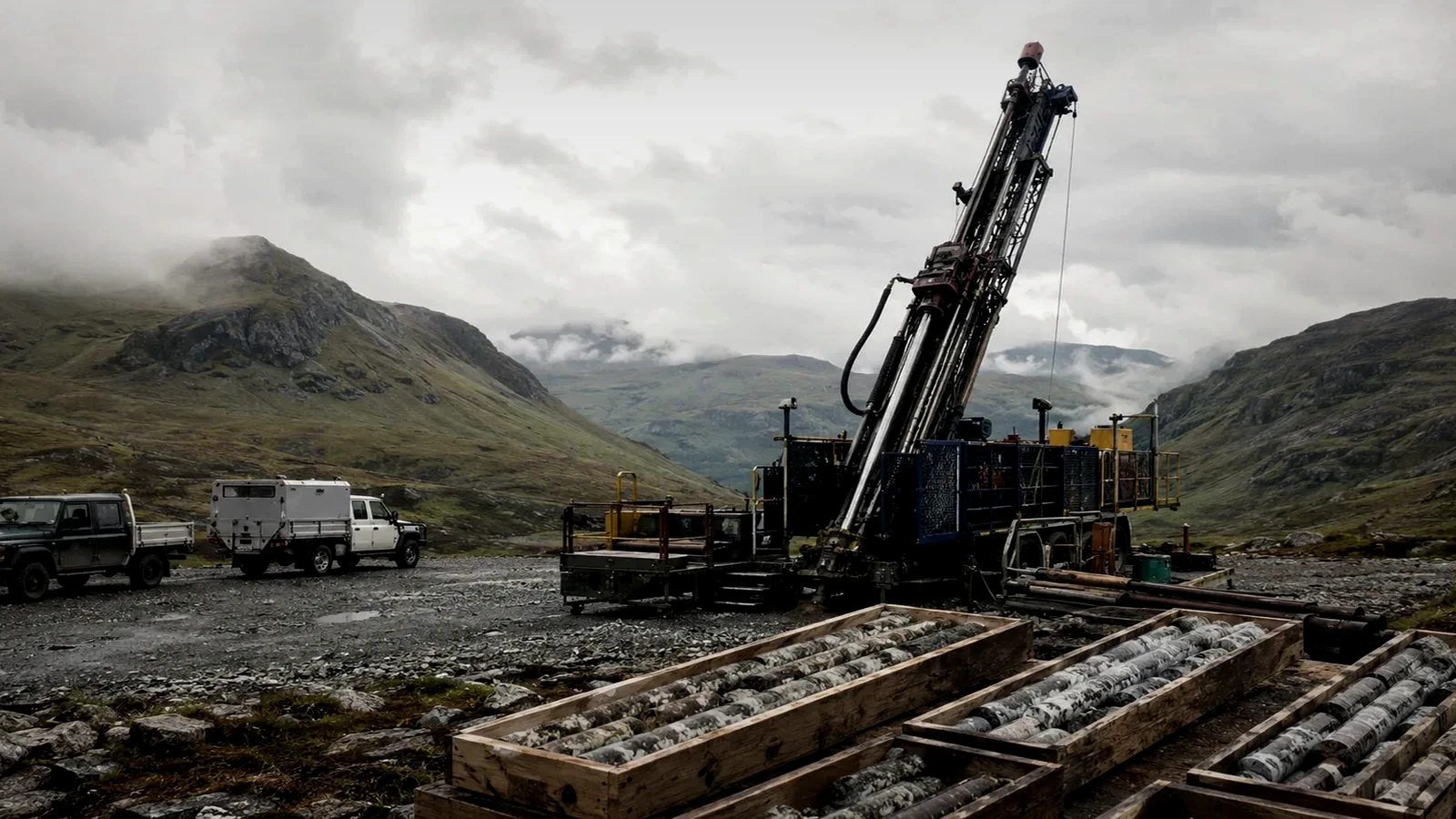
Representative editorial image prepared for Cornerstone Market Intelligence; not a photograph of the announced event.
- Cosa plans approximately 800 metres of diamond drilling in four to six holes across multiple Aurora target areas.
- The campaign is fully funded by Traction Uranium under an earn-in agreement, while Cosa remains project operator.
- Aurora lies about 16 kilometres east of the Key Lake mill and is being drill tested for the first time in more than four decades.
Aurora has moved from geophysics into its first modern drill test
Cosa Resources has started drilling at the Aurora uranium project in Saskatchewan’s southeastern Athabasca Basin, moving the property from target generation into direct subsurface testing. The planned program is approximately 800 metres in four to six diamond drill holes.
The campaign is the first drilling at Aurora in more than four decades. Cosa says no diamond drilling has been completed on the project since 1979, which means the new program can apply modern electromagnetic, magnetic and radiometric targeting to ground that has not been tested with current exploration methods.
The initial holes are designed to evaluate conductive anomalies that sit beside, or up-ice from, uranium-source radiometric anomalies identified through the company’s recent geophysical work.
Source: [1]
The target areas combine conductivity, structure and radiometric evidence
Cosa’s current targets build on a 2024 VTEM survey and a 2026 property-wide high-resolution magnetic and radiometric program. The newer survey identified or upgraded several areas that the company considers suitable for drilling.
Target A1 is a northeast-trending conductive response beside a uranium-source radiometric anomaly in the southwest part of the project. Target A2 combines conductivity with interpreted magnetic lineaments and several down-ice radiometric anomalies.
Targets A4 and A5 are curving conductive trends near interpreted structural lineaments and up-ice from uranium-source radiometric anomalies. Together, the target set gives the first campaign several independent geophysical signatures to test rather than relying on a single anomaly type.
Traction is funding the work while Cosa operates the program
The Aurora drilling is fully funded by Traction Uranium under the February 2026 option agreement between the two companies. Cosa remains operator, allowing its Saskatchewan technical team to direct the field program while the exploration spending is provided by the partner.
Under the agreement, Traction can earn up to an 80% interest in Aurora by sole-funding C$9.15 million in exploration expenditures and completing the required cash and share payments.
That structure lets Cosa advance an additional Athabasca Basin project without drawing the current Aurora work from the same exploration budget used for its other core programs.
Source: [1]
A shallow, infrastructure-adjacent project joins Cosa’s active Athabasca pipeline
Aurora covers a 17-kilometre section of the southeastern rim of the Athabasca Basin and sits about 16 kilometres east of Cameco’s Key Lake mill and historical mine. Sandstone cover is expected to be less than 100 metres thick in the northern third of the property and absent across the remainder.
Cosa is also active at the Darby and Murphy Lake North joint ventures with Denison Mines, so the Aurora launch adds another drill program to an already concentrated Saskatchewan exploration pipeline.
For Aurora, the immediate milestone is straightforward: put modern drill holes into the highest-priority conductive and radiometric targets and convert several years of geophysical work into direct geological information.
Sources and further reading
This independent report summarizes public company disclosures and official source materials. Cornerstone Marketing Inc. received no compensation for this article. It is informational and is not investment advice or a recommendation to buy or sell securities.