
Source-linked company news. Sources checked September 28, 2026.
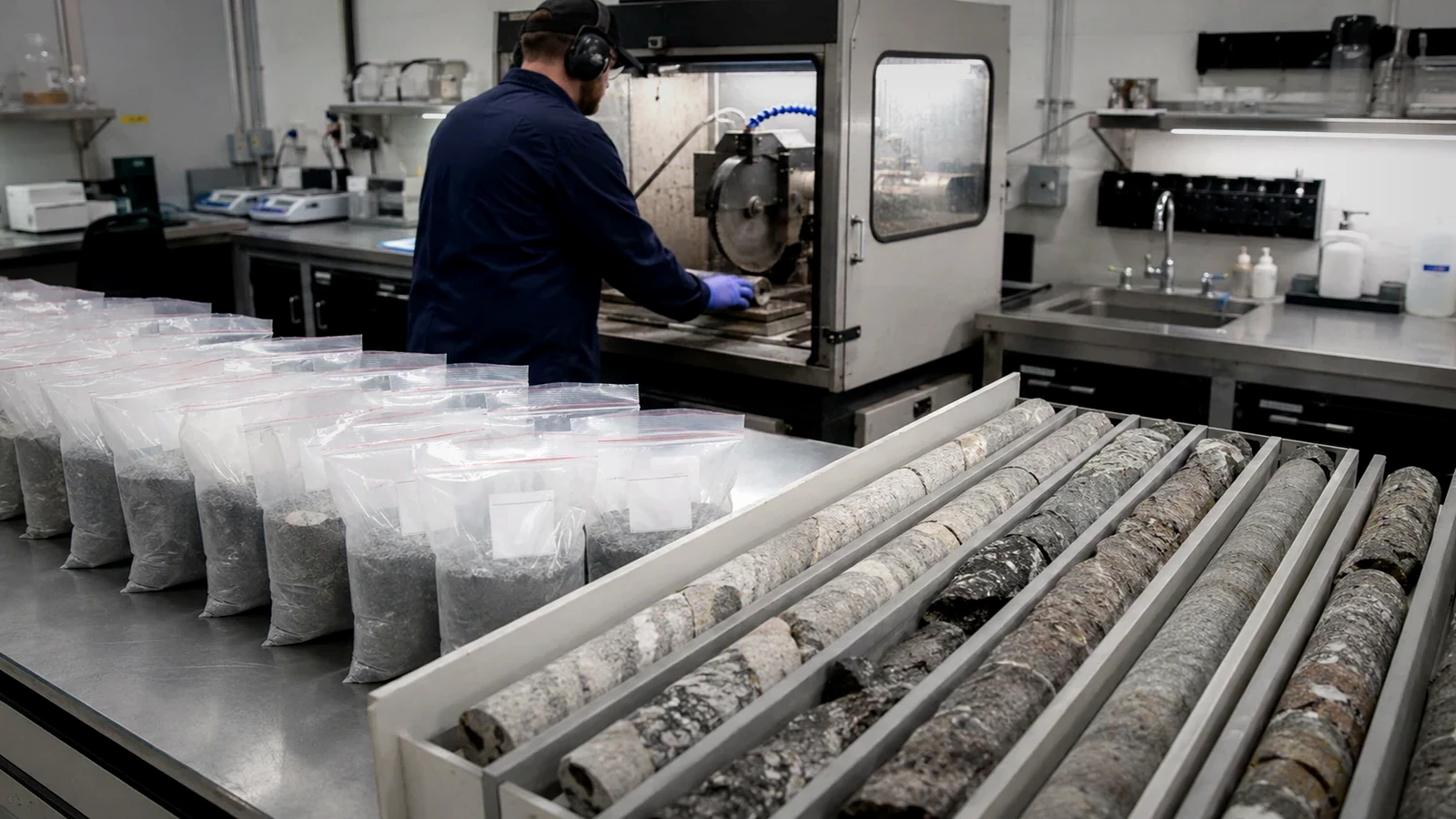
Representative editorial image prepared for Cornerstone Market Intelligence; not a photograph of the announced event.
- The Richmond Hill PFS resource update will incorporate 42,791 metres of drilling from 2025 and 2026 across 333 drill holes.
- Dakota Gold selected a 0.5-inch crush size after modeled oxide gold recovery averaged 80.4%, versus 75.9% at a 1-inch crush size.
- The project team selected one consolidated heap-leach facility and has already moved into feasibility-stage drilling and metallurgical work.
The Richmond Hill PFS now has its final drilling dataset
Dakota Gold’s September 28 update closes one of the major technical workstreams ahead of the Richmond Hill pre-feasibility study. The company says the final assays required for the PFS resource update have now been received, allowing the full 2025 and 2026 drilling dataset to move into the updated resource model, mine plan and production schedule.
In total, 42,791 metres of drilling from 2025 and 2026 are being added to the upcoming resource update. Dakota Gold says the revised model will incorporate 333 drill holes completed over the two campaigns, representing roughly 30% more drilling data than the prior resource model.
The PFS remains scheduled for the fourth quarter of 2026. With the assay dataset complete, the company can now combine the expanded drilling database with its recent metallurgical work and finalize the technical assumptions that feed into mine sequencing and project economics.
Source: [1]
A 0.5-inch crush size was selected after the latest recovery work
Dakota Gold has completed the PFS trade-off evaluation for primary crushing and selected a 0.5-inch, or 12.7-millimetre, design crush size for Richmond Hill.
The company’s recent metallurgical program modeled average ultimate gold recovery of 80.4% for oxide material at the 0.5-inch crush size, compared with 75.9% at a 1-inch crush size. That difference gives the PFS a defined processing assumption backed by the latest column-test work.
The updated PFS resource will focus entirely on oxide material. Dakota Gold says the study will exclude transition material and apply the new metallurgical framework to recovery assignment, ore routing and mine sequencing.
One heap-leach facility simplifies the planned site layout
The second major design decision is a move to a single heap-leach facility located generally within the area identified for Phase 1 in the company’s earlier Initial Assessment with Cash Flow.
Instead of carrying multiple conceptual heap-leach areas into the next study stage, the consolidated layout brings material handling, solution management, liner preparation, geotechnical design and long-term monitoring into one principal operating area.
Dakota Gold says the combined crush-size and site-layout decisions will now feed directly into the PFS capital estimate, operating plan, permitting design and economic model. That gives the upcoming study a more defined physical configuration than the earlier conceptual plan.
Source: [1]
Feasibility work is already moving behind the PFS
Dakota Gold is not waiting for the PFS to begin the next layer of technical work. Two drills are currently operating to support post-PFS resource conversion and collect additional material for feasibility-level metallurgical variability testing.
The planned feasibility program includes additional column testing across major lithologies and geometallurgical domains, along with work designed to refine the recovery model, stacking plan and mine-to-heap schedule. The company currently expects the feasibility study in mid-2027.
That sequencing keeps Richmond Hill moving through a continuous technical pipeline: final PFS assays are now in hand, key process and layout choices have been made, and the next drilling and metallurgical program is already underway.
Sources and further reading
This independent report summarizes public company disclosures and official source materials. Cornerstone Marketing Inc. received no compensation for this article. It is informational and is not investment advice or a recommendation to buy or sell securities.