
Editorial analysis based on publicly accessible cited materials. No issuer payment or editorial approval.
- A Form 4 can reveal meaningful alignment, but one filing rarely tells the whole story without context on compensation, prior holdings and the nature of the transaction.
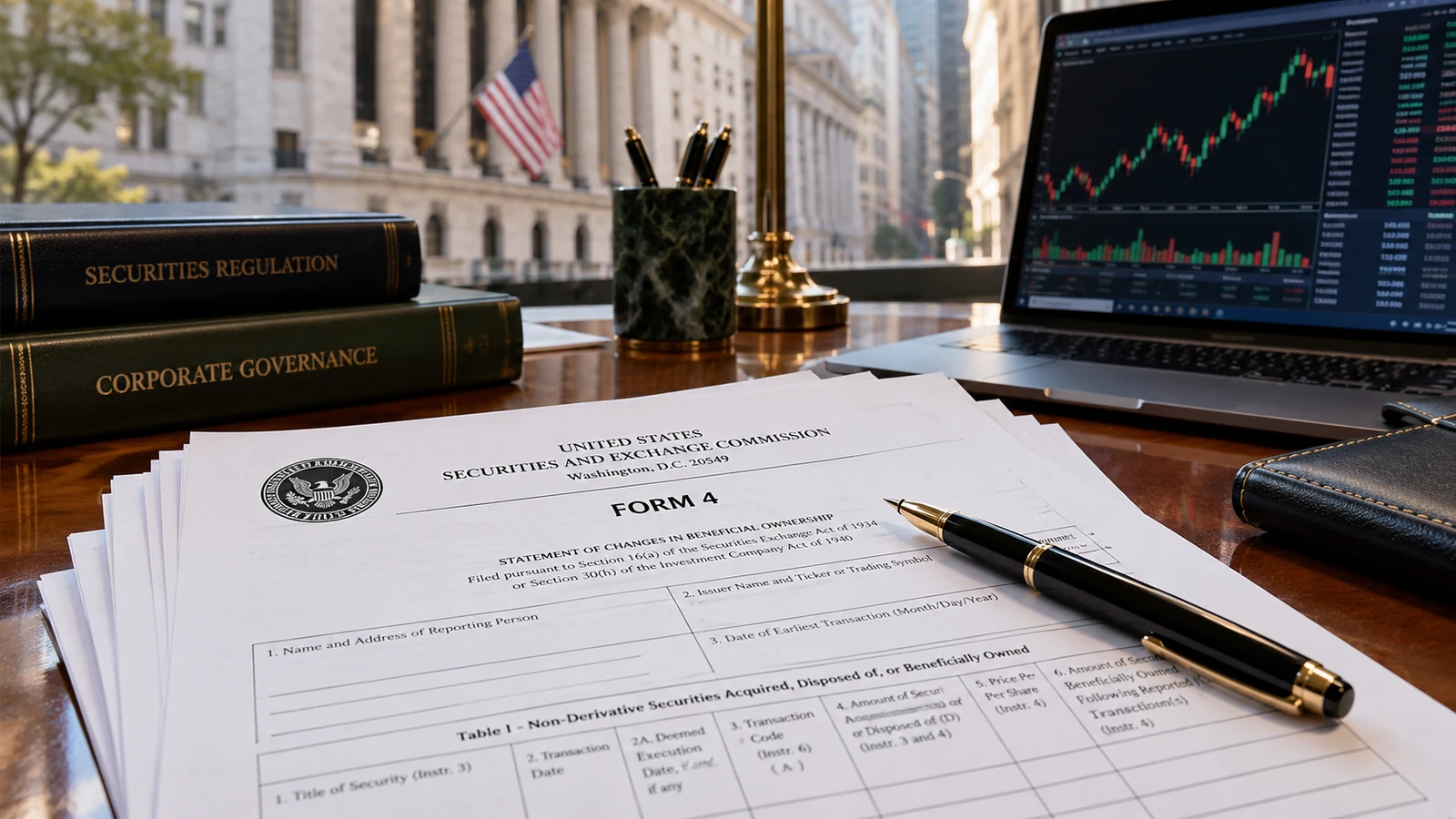
- Form 4 filings disclose changes in beneficial ownership by directors, officers and other reporting insiders. Investors often watch them closely because insiders usually know their businesses better than the market does.
- The first distinction is between open-market activity and administrative transactions. A purchase in the market can carry a different informational weight from an award, an option exercise or a sale used to cover taxes.
What happened
Form 4 filings disclose changes in beneficial ownership by directors, officers and other reporting insiders. Investors often watch them closely because insiders usually know their businesses better than the market does.
The first distinction is between open-market activity and administrative transactions. A purchase in the market can carry a different informational weight from an award, an option exercise or a sale used to cover taxes.
Size matters as well. A headline about insider buying may sound impressive, but the real question is how the transaction compares with the insider’s existing holdings and compensation structure.
Timing can also be misleading. Some sales follow preset trading plans or personal liquidity needs and do not necessarily reflect a negative operating view. Likewise, a small purchase does not by itself prove a fundamental inflection.
The most useful reading combines the filing with background: prior transaction history, the company’s recent results and whether multiple insiders are acting in the same direction.
Used properly, Form 4 can add texture to an investment thesis. Used in isolation, it can encourage more certainty than the underlying information actually supports.
What to verify next
- Whether the transaction was an open-market buy or sale versus an award, tax withholding event or option exercise.
- How the filing compares with the insider’s existing ownership position and recent activity.
- Whether multiple insiders are transacting in the same direction around a meaningful corporate development.
Source review
This report was prepared from the identified source linked below and checked for the company name, ticker, publication date and material framework used in the summary.
Only substantive editorial changes receive a new modified date. Formatting, design and site-wide link maintenance do not refresh the publication record.
This article is informational and is not investment advice or a recommendation to buy or sell securities. Readers should review the original source and report factual concerns through our corrections page.