
This article was selected without issuer payment or pre-publication approval and prepared under Cornerstone Market Intelligence editorial standards. The source material used is linked on this page.
- FuelCell Energy signed its first data-center capacity reservation, reported $1.3 billion of committed backlog and separated another $2.4 billion of option-based awarded capacity.
- FuelCell Energy reported fiscal third-quarter revenue of $33.0 million, down 29% year over year, and a net loss of $45.3 million. The company ended July with $737.3 million in cash, cash equivalents and restricted cash while advancing a data-centre power strategy and manufacturing expansion.
- After the quarter, FuelCell signed its first capacity reservation agreement with a major data-centre operator for a planned 75-megawatt Texas project, supported by an upfront reservation payment. The company did not identify the customer or present the reservation as recognized revenue.
The development
FuelCell Energy reported fiscal third-quarter revenue of $33.0 million, down 29% year over year, and a net loss of $45.3 million. The company ended July with $737.3 million in cash, cash equivalents and restricted cash while advancing a data-centre power strategy and manufacturing expansion.
After the quarter, FuelCell signed its first capacity reservation agreement with a major data-centre operator for a planned 75-megawatt Texas project, supported by an upfront reservation payment. The company did not identify the customer or present the reservation as recognized revenue.
Committed backlog was approximately $1.3 billion, up 4.1% year over year and including a 30-megawatt initial Fit Energy phase. FuelCell separately reported $2.4 billion of awarded capacity tied to Fit Energy options for as much as 350 additional megawatts.
The separation between committed and awarded capacity is critical. The additional Fit Energy phases require elections, deposits and project-specific agreements; awarded capacity is not contracted backlog and may not convert into revenue.
FuelCell is expanding its Torrington manufacturing facility toward 500 megawatts of annual production capacity by June 2028. That investment could support larger deployments, but it raises execution risk while revenue is lower and the gross loss widened to $24.5 million during the quarter.
Why this matters
The first paid data-centre reservation provides a concrete commercial step beyond a general sales pipeline.
The Fit Energy framework creates large upside potential, but most of its stated value remains conditional rather than committed.
Industry and company context
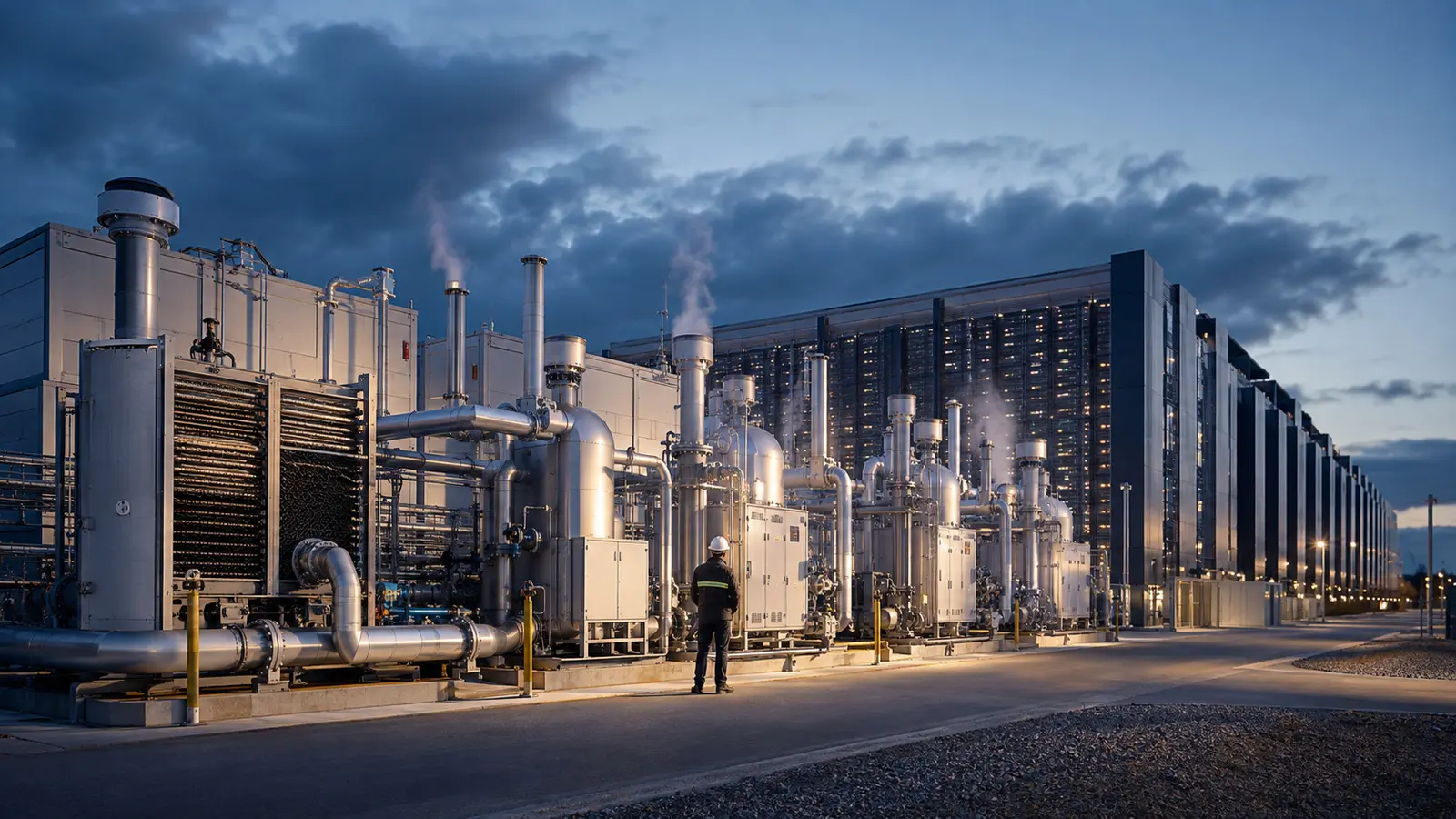
FuelCell Energy is positioning carbonate fuel cells as behind-the-meter baseload power for electricity-constrained data-centre markets.
The company is also delivering carbon-capture modules under its collaboration with ExxonMobil and expanding production capacity.
How to evaluate the update
Progress should be measured by executed project agreements, customer deposits, deliveries and revenue—not by the total pipeline alone.
The 75-megawatt reservation becomes more meaningful if the company discloses a definitive power agreement, site milestones and a delivery timetable.
Execution and risk considerations
Awarded capacity may not convert to committed backlog or revenue, in whole or in part.
Manufacturing expansion and project execution require capital while the company continues to report operating and gross losses.
What to watch next
- Definitive milestones for the 75 MW Texas data-centre project.
- Delivery of the initial 30 MW Fit Energy phase.
- Conversion of awarded capacity into committed backlog and revenue.
Cornerstone perspective
FuelCell Energy’s quarter shows a sharper data-centre strategy, but also why backlog definitions matter when evaluating the scale of that opportunity.
The next proof point is conversion: conditional capacity must become signed projects, delivered equipment and improving unit economics.
This article is informational and is not investment advice or a recommendation to buy or sell securities. Forward-looking statements involve risks and uncertainty. Readers should review the original source and report factual concerns through our corrections page.