
This article was selected without issuer payment or pre-publication approval and prepared under Cornerstone Market Intelligence editorial standards. The source material used is linked on this page.
- Insider purchase and sale reports can be useful signals, but transaction codes, compensation plans and ownership context matter.
- Changes in ownership by company directors, officers and other reporting persons can draw immediate attention. A reported insider purchase may be interpreted as confidence, while a sale may raise questions. Neither conclusion is reliable without checking the actual filing.
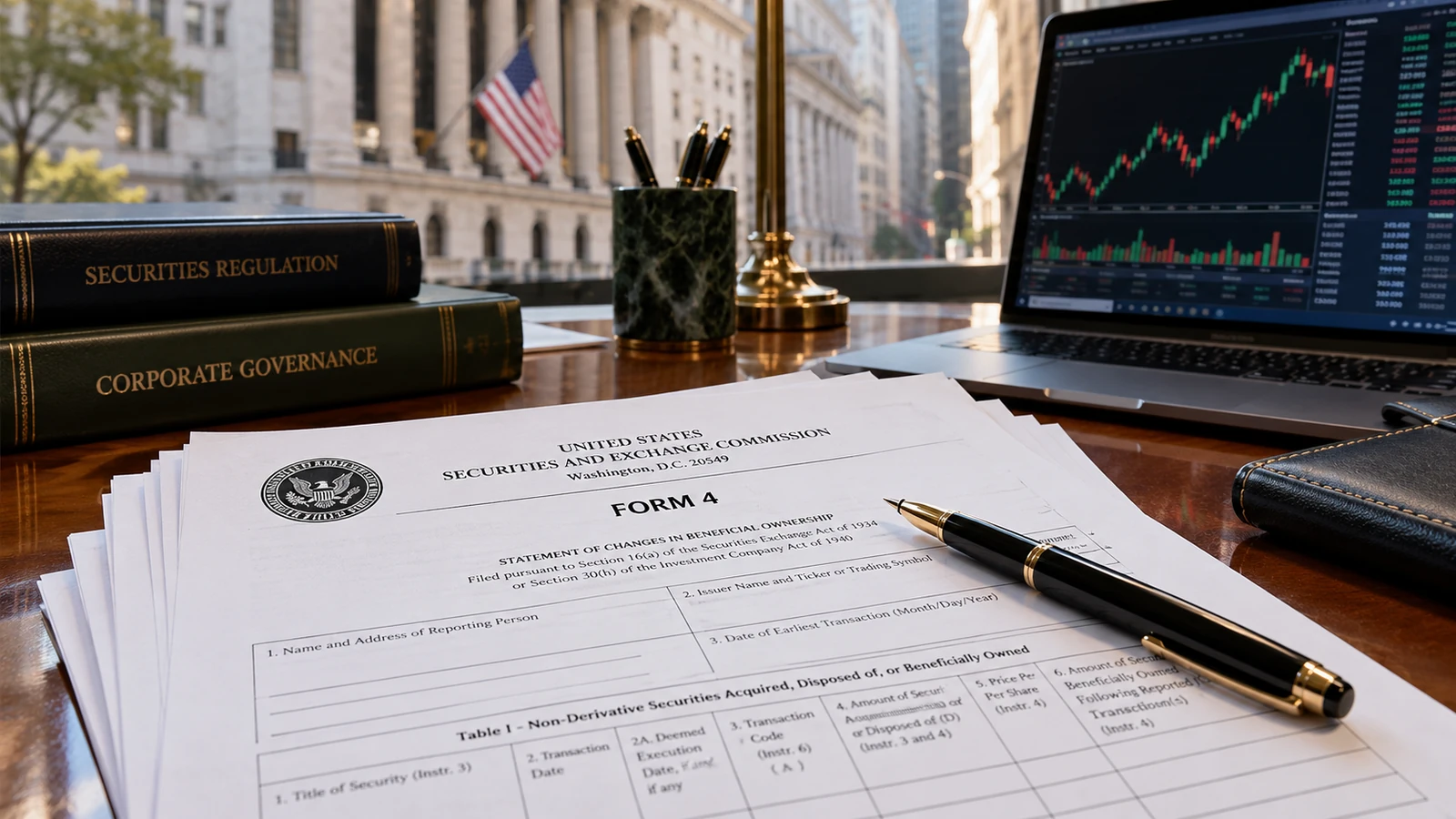
- SEC Form 4 reports certain changes in beneficial ownership by covered insiders. The transaction table includes codes, dates, amounts and reported prices. Those details help distinguish open-market purchases and sales from equity awards, option exercises, gifts and other events.
The development
Changes in ownership by company directors, officers and other reporting persons can draw immediate attention. A reported insider purchase may be interpreted as confidence, while a sale may raise questions. Neither conclusion is reliable without checking the actual filing.
SEC Form 4 reports certain changes in beneficial ownership by covered insiders. The transaction table includes codes, dates, amounts and reported prices. Those details help distinguish open-market purchases and sales from equity awards, option exercises, gifts and other events.
An insider sale can happen for reasons unrelated to a change in the company outlook, including diversification, tax obligations or prearranged selling programs. Similarly, equity received through compensation does not represent the same decision as purchasing shares with personal funds on the open market.
Position size and transaction history provide further context. A modest purchase by an executive with substantial existing holdings can carry different significance from a large new commitment relative to that person’s prior reported exposure.
Investors should also understand direct and indirect ownership, the distinction between derivative and non-derivative securities, and explanatory footnotes. These can meaningfully alter the interpretation of a transaction that appears straightforward in a social-media summary.
Form 4 is best used as one factual input alongside financial statements, operating developments and valuation. The filing documents a transaction; it does not disclose every motive behind it or predict the future share price.
Why this matters
SEC Form 4 reports certain changes in beneficial ownership by covered insiders. The transaction table includes codes, dates, amounts and reported prices. Those details help distinguish open-market purchases and sales from equity awards, option exercises, gifts and other events.
An insider sale can happen for reasons unrelated to a change in the company outlook, including diversification, tax obligations or prearranged selling programs. Similarly, equity received through compensation does not represent the same decision as purchasing shares with personal funds on the open market.
Industry and company context
Changes in ownership by company directors, officers and other reporting persons can draw immediate attention. A reported insider purchase may be interpreted as confidence, while a sale may raise questions. Neither conclusion is reliable without checking the actual filing.
SEC Form 4 reports certain changes in beneficial ownership by covered insiders. The transaction table includes codes, dates, amounts and reported prices. Those details help distinguish open-market purchases and sales from equity awards, option exercises, gifts and other events.
How to evaluate the update
Position size and transaction history provide further context. A modest purchase by an executive with substantial existing holdings can carry different significance from a large new commitment relative to that person’s prior reported exposure.
Investors should also understand direct and indirect ownership, the distinction between derivative and non-derivative securities, and explanatory footnotes. These can meaningfully alter the interpretation of a transaction that appears straightforward in a social-media summary.
Execution and risk considerations
Investors should also understand direct and indirect ownership, the distinction between derivative and non-derivative securities, and explanatory footnotes. These can meaningfully alter the interpretation of a transaction that appears straightforward in a social-media summary.
What to watch next
- Form 4 is best used as one factual input alongside financial statements, operating developments and valuation. The filing documents a transaction; it does not disclose every motive behind it or predict the future share price.
Cornerstone perspective
Form 4 is best used as one factual input alongside financial statements, operating developments and valuation. The filing documents a transaction; it does not disclose every motive behind it or predict the future share price.
This article is informational and is not investment advice or a recommendation to buy or sell securities. Forward-looking statements involve risks and uncertainty. Readers should review the original source and report factual concerns through our corrections page.