
Source-linked company news. Sources checked September 28, 2026.
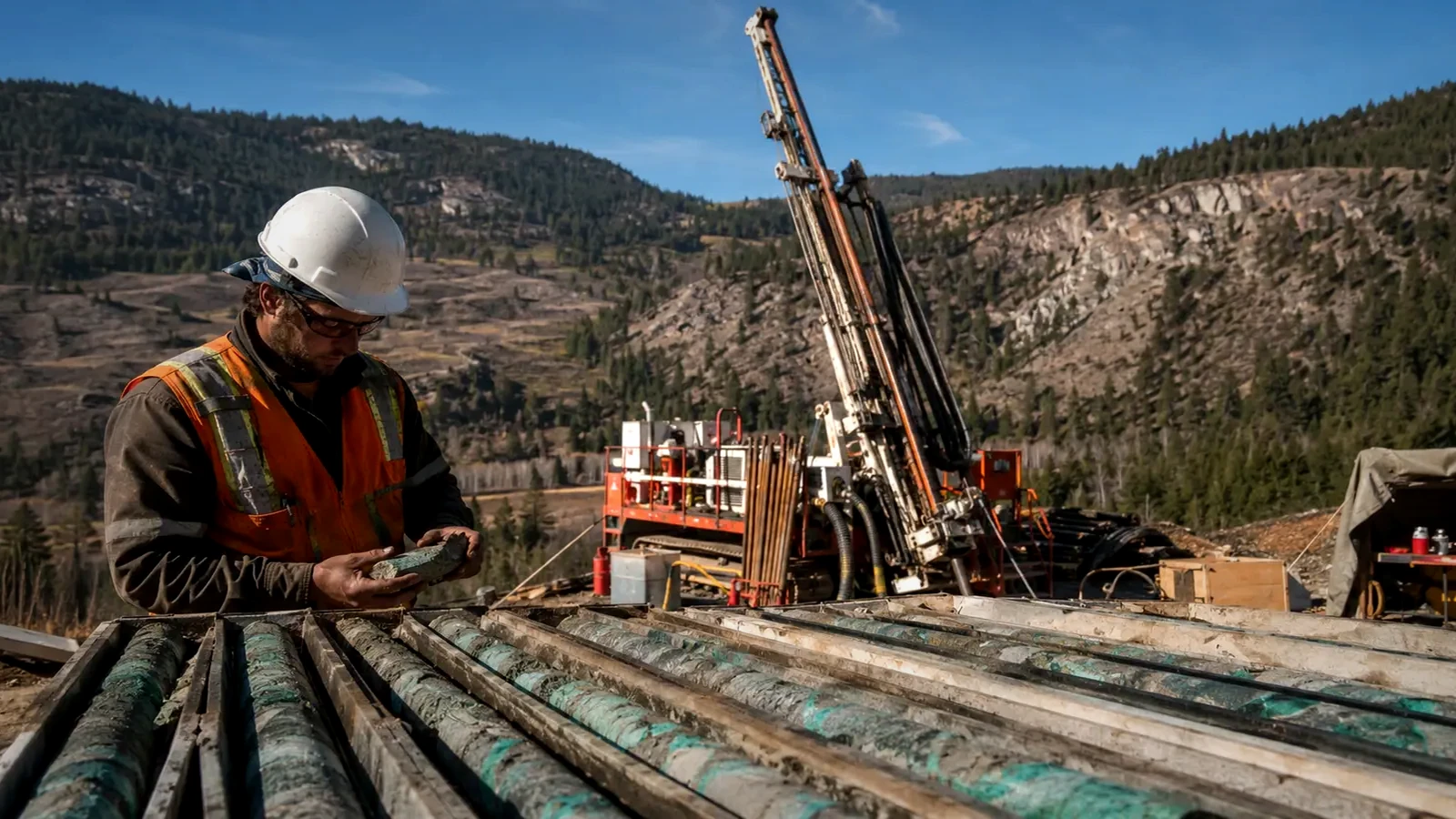
Representative editorial image prepared for Cornerstone Market Intelligence; not a photograph of the announced event.
- Hole 3615-26-08 returned 2.45 metres grading 4.03% copper, 24.87% combined zinc and lead and 313.82 g/t silver.
- That interval included 0.75 metres grading 933 g/t silver and 12.85% copper, the strongest copper and silver assays Northmin has reported from Tynagh to date.
- The first four Northmin holes have tested about 125 metres of strike, while four additional widely spaced holes have been completed with assays pending.
Tynagh’s latest hole produced Northmin’s strongest copper-silver interval yet
Northmin’s second pair of holes at the historic Tynagh mine site has lifted the grade profile of the company’s 2026 hard-rock exploration program. Hole 3615-26-08 returned 2.45 metres grading 4.03% copper, 24.87% combined zinc and lead, 0.47% antimony and 313.82 g/t silver from 106.75 metres.
Within that interval, the detailed assay table reports 0.75 metres grading 12.85% copper and 933 g/t silver. Northmin describes the result as its highest copper and silver assays received to date from the Tynagh drill program.
The high-grade interval sits inside a wider package of reef-hosted and footwall mineralization, giving the company more than a single narrow assay to work with as it builds its geological interpretation.
Source: [1]
Broad polymetallic zones add scale around the high-grade core
Hole 3615-26-08 also intersected 33 metres grading 0.30% copper, 2.42% combined zinc and lead and 21.26 g/t silver from 56 metres. Within that broader zone, 7 metres graded 1.01% copper, 2.88% combined zinc and lead and 63.43 g/t silver.
A separate 13-metre interval returned 4.04% combined zinc and lead, while the previously unmined Lower Muddy Limestone beneath the reef produced additional copper-silver mineralization. These intersections expand the amount of mineralized rock being observed around the historic mine workings.
Northmin’s second new hole, 3615-26-09, also intersected multiple polymetallic zones, including 24.45 metres of reef-hosted mineralization and 19.7 metres of mineralization in the Lower Muddy Limestone.
The first four holes are building continuity along the Tynagh structure
The latest results follow the company’s July drilling, when the first two holes returned high-grade copper beneath and around the historically mined zinc-lead-silver system. With the new assays, Northmin has now reported on four holes spanning roughly 125 metres of strike.
The company says the combined results support its interpretation of near-mine reef-hosted polymetallic mineralization together with structurally controlled copper, silver and antimony mineralization along the Tynagh Fault.
The Lower Muddy Limestone is also emerging as an additional host unit beneath the reef, adding another geological setting for follow-up work within the same brownfield system.
Source: [1]
Four more completed holes extend the program beyond the reported area
Northmin says another four widely spaced holes have already been completed and are awaiting assays. Those holes broaden the program beyond the 125-metre section covered by the first four reported holes and begin testing more of the roughly 1.6-kilometre strike of the historically mined deposit.
That gives the current campaign a useful sequence: the first holes established high-grade copper, the latest holes added the strongest silver and copper grades yet, and the next batch can show how widely the mineralized architecture persists across the mine trend.
Northmin is also advancing the separate Tynagh tailings opportunity, giving the project both a brownfield hard-rock exploration program and a surface-resource workstream within the same site footprint.
Sources and further reading
This independent report summarizes public company disclosures and official source materials. Cornerstone Marketing Inc. received no compensation for this article. It is informational and is not investment advice or a recommendation to buy or sell securities.