
Editorial analysis based on publicly accessible cited materials. No issuer payment or editorial approval.
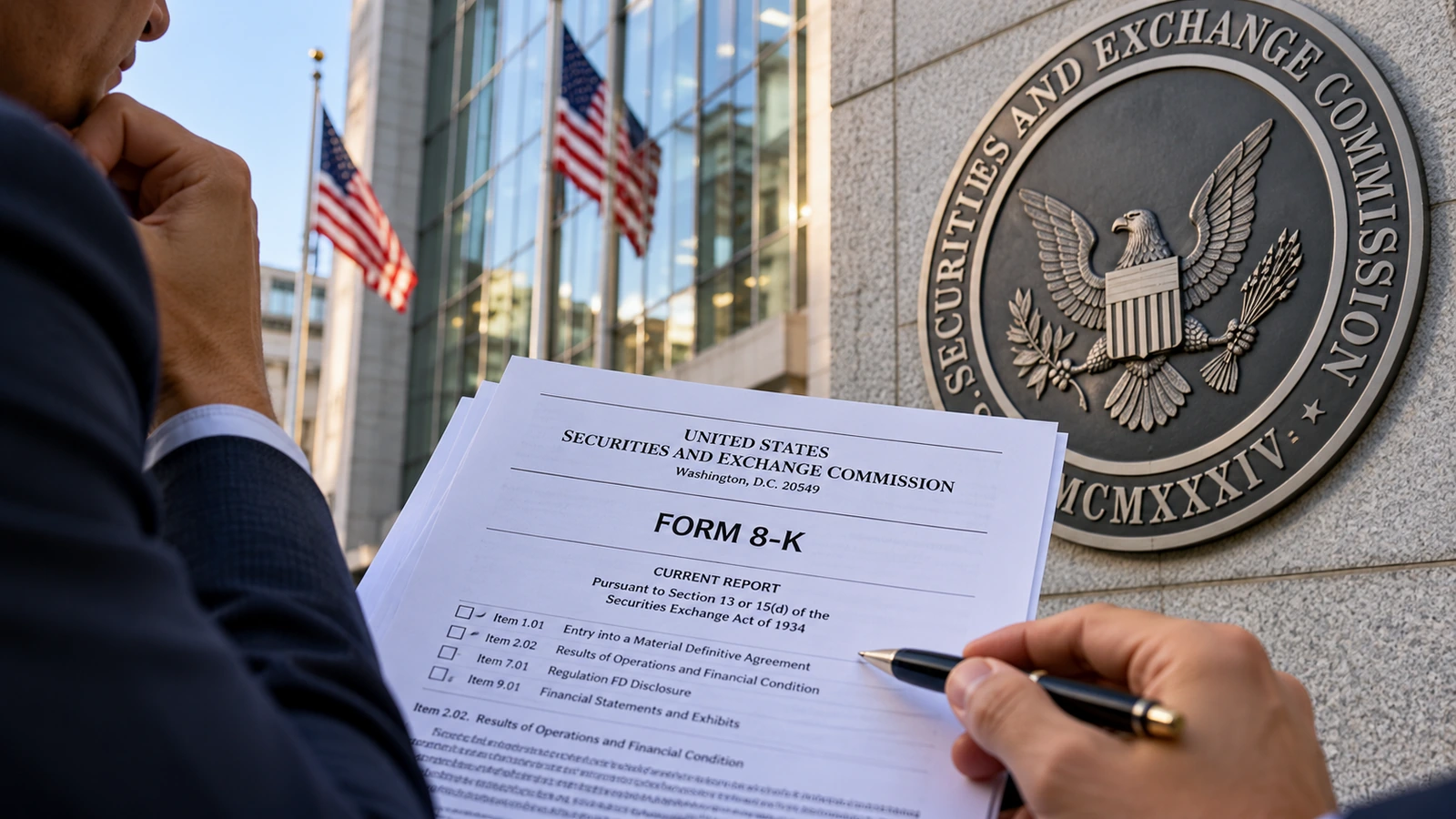
- The most useful parts of an 8-K are often the filing items and attached exhibits, not the headline accompanying the announcement.
- Background documents and the original source are linked below.
The development
Form 8-K is the SEC’s current-report vehicle for specified material events. For an investor following a small public company, it can reveal developments that have consequences well beyond a short press release.
Different item numbers identify different types of disclosure. A material definitive agreement, completion of an acquisition, change in directors or an unregistered security sale can have very different implications for financing and control.
Why it matters
An exhibit may carry the operative agreement, while a promotional summary may describe only the business rationale. Readers should verify the precise closing conditions, termination rights, contingent payments and any lockups directly against the filing.
Timing is another important distinction. Signing an agreement does not necessarily mean that cash has been transferred or that an acquisition has closed. Conditional steps remain conditional until the company discloses satisfaction or waiver of the relevant provisions.
What investors should examine
Capital structure matters especially for small issuers. Convertible securities, warrants, preferred shares and earn-outs can affect the future share count even if the immediate cash consideration appears modest.
The SEC’s EDGAR search allows investors to inspect the original document, its date and its amendments. Building a view from filings rather than isolated headlines makes follow-up disclosures easier to assess.
Source and next steps
This report draws on U.S. Securities and Exchange Commission. The source provides the primary context; subsequent filings and disclosures may change the picture.