
This article was selected without issuer payment or pre-publication approval and prepared under Cornerstone Market Intelligence editorial standards. The source material used is linked on this page.
- Thistle Resources placed the first drill on site for a 3,000-metre program designed to expand the Middle River Upper Zone and test depth and flank targets.
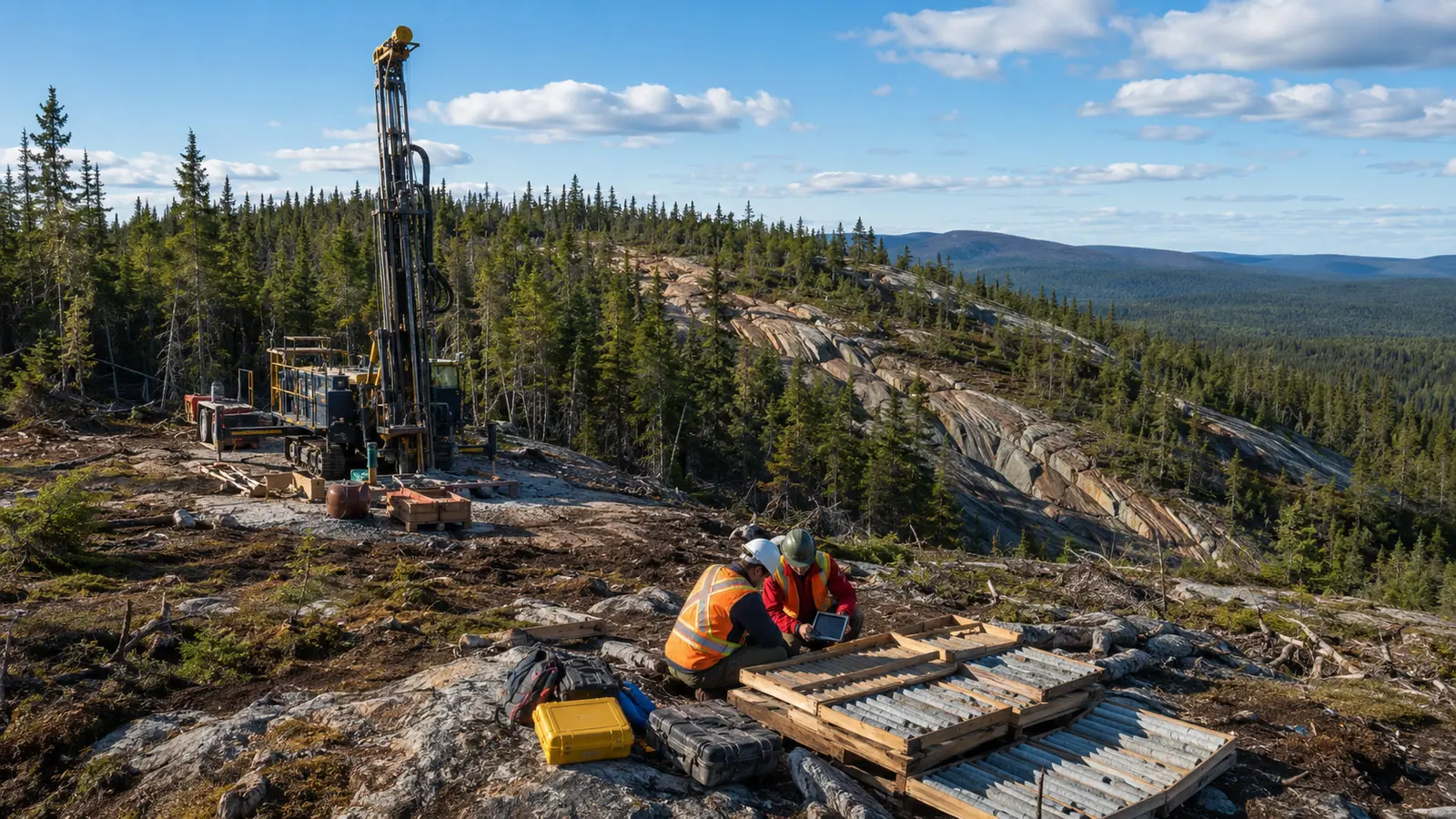
- Thistle Resources initiated a 3,000-metre Phase 3 drill program at its Middle River gold project in New Brunswick’s Bathurst Mining Camp, with the rig set up on the first planned drill pad.
- The campaign will continue testing the Middle River Upper Zone after two earlier drill programs. Thistle plans to expand the known footprint, examine depth potential and test targets on the flanks of the currently modeled mineralized body.
The development
Thistle Resources initiated a 3,000-metre Phase 3 drill program at its Middle River gold project in New Brunswick’s Bathurst Mining Camp, with the rig set up on the first planned drill pad.
The campaign will continue testing the Middle River Upper Zone after two earlier drill programs. Thistle plans to expand the known footprint, examine depth potential and test targets on the flanks of the currently modeled mineralized body.
Geophysical interpretation has outlined approximately seven kilometres of mineralized folds across the target area. The company also identified an untested lower-zone target approximately 400 metres below surface.
Management said the new drilling and integrated three-dimensional model are intended to support a future mineral-resource update. The company has stated an objective of defining more than two million ounces of gold, but expressly identifies that figure as a target rather than a current NI 43-101 mineral resource or reserve.
Starting the program is an execution milestone, not a geological result. The next evidence will come from completed holes, assay intervals and an updated interpretation showing whether mineralization extends beyond areas tested previously.
Why this matters
The new program tests both extensions of the Upper Zone and a deeper geophysical concept within a much longer folded trend.
Results could refine the three-dimensional model used to plan a later resource update.
Industry and company context
Middle River is one of Thistle’s precious-metals and critical-minerals projects in the Bathurst Mining Camp.
The stated two-million-ounce objective is an exploration target and should not be read as a current resource estimate.
How to evaluate the update
The program should be assessed on true widths, continuity and the relationship between new holes and prior Upper Zone intersections.
A deep geophysical target becomes meaningful only if drilling confirms favorable geology and mineralization at the interpreted position.
Execution and risk considerations
The size and continuity implied by geophysical interpretation may not be confirmed by drilling.
There is no guarantee that the company’s ounce objective will be achieved or support economic extraction.
What to watch next
- Completion of the first Phase 3 holes and initial assays.
- Testing of the lower-zone and flank targets.
- Timing and scope of any updated NI 43-101 technical work.
Cornerstone perspective
Thistle’s plan is technically useful because it combines expansion drilling with a direct test of a deeper target.
Investors should separate the company’s long-term ounce objective from the measured evidence that each new hole provides.
This article is informational and is not investment advice or a recommendation to buy or sell securities. Forward-looking statements involve risks and uncertainty. Readers should review the original source and report factual concerns through our corrections page.