This article was selected without issuer payment or pre-publication approval and prepared under Cornerstone Market Intelligence editorial standards. The source material used is linked on this page.
- September Phase VI results extended the high-grade B2B breccia strike and identified additional mineralization beyond the previously modeled zone.
- ATEX Resources is using its Phase VI results to change the scale of the geological question at Valeriano. Its September 16 update said the program expanded the strike of the high-grade B2B breccia by 50% and identified mineralization farther east and north.
- Valeriano is a copper-gold system in Chile. The B2B breccia is one part of a wider mineralized setting, so the distinction between extending a defined zone and discovering a new related area is important for interpreting the company’s map.
The development
ATEX Resources is using its Phase VI results to change the scale of the geological question at Valeriano. Its September 16 update said the program expanded the strike of the high-grade B2B breccia by 50% and identified mineralization farther east and north.
Valeriano is a copper-gold system in Chile. The B2B breccia is one part of a wider mineralized setting, so the distinction between extending a defined zone and discovering a new related area is important for interpreting the company’s map.
Earlier in the program, ATEX reported extension of the breccia roughly 200 metres south in hole ATXD19A. Another hole, ATXD19B, ended in 37 metres grading 1.72% copper equivalent, according to the August 26 company announcement.
Copper-equivalent grade is a combined measurement that depends on assumptions about metal prices and recoveries. It should not be treated as a direct copper assay, and reported downhole lengths should not be mistaken automatically for true thickness.
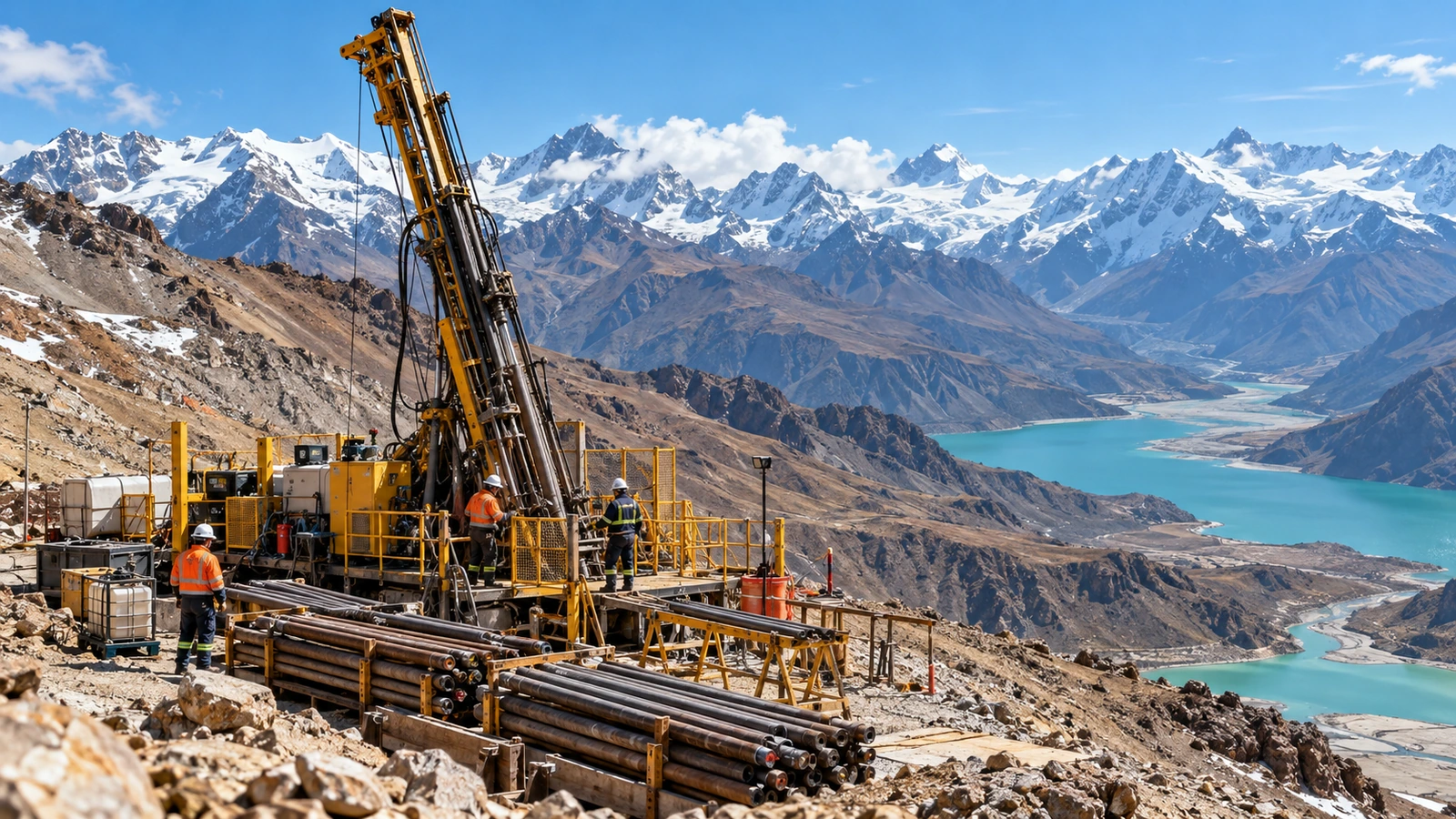
The record drilling program gives geologists additional sections through the breccia and surrounding zones. The next task is to reconcile those holes into a coherent three-dimensional model rather than simply count high-grade intersections.
ATEX has discussed Phase VII work to test the scale of B2B. Follow-up drilling can help determine whether the newly identified mineralization is continuous, separated by structural breaks or part of a wider linked system.
At this stage, resource definition and economic evaluation remain separate hurdles. Drill results can strengthen geological confidence without answering questions about mining method, recovery or project capital requirements.
Why this matters
The step-out results may change the interpreted dimensions of mineralization rather than merely increasing the number of drill holes.
Testing the newly identified eastern and northern zones can clarify whether B2B is a contained body or part of a more extensive system.
Industry and company context
Valeriano is an advanced exploration project in Chile’s copper-gold belt.
Copper-equivalent reporting combines metal values and should be evaluated together with the underlying assay tables and assumptions.
How to evaluate the update
Cross-sections, spacing and true-width estimates will help measure continuity.
A future resource estimate and subsequent studies would provide more meaningful project-scale comparisons.
Execution and risk considerations
Step-out intercepts are not guarantees of economically continuous mineralization.
High-altitude field logistics and technical study work can affect drilling plans.
What to watch next
- Phase VII drilling objectives and mobilization.
- Revised B2B cross-sections and resource-model work.
- Metallurgical and development information as the project advances.
Cornerstone perspective
The most useful development at Valeriano is the growing geological model. The company now has a chance to show how separate drill results fit together into a repeatable deposit geometry.
This article is informational and is not investment advice or a recommendation to buy or sell securities. Forward-looking statements involve risks and uncertainty. Readers should review the original source and report factual concerns through our corrections page.