A detailed review of the business, leadership and publicly reported progress. Sources checked September 5, 2026.
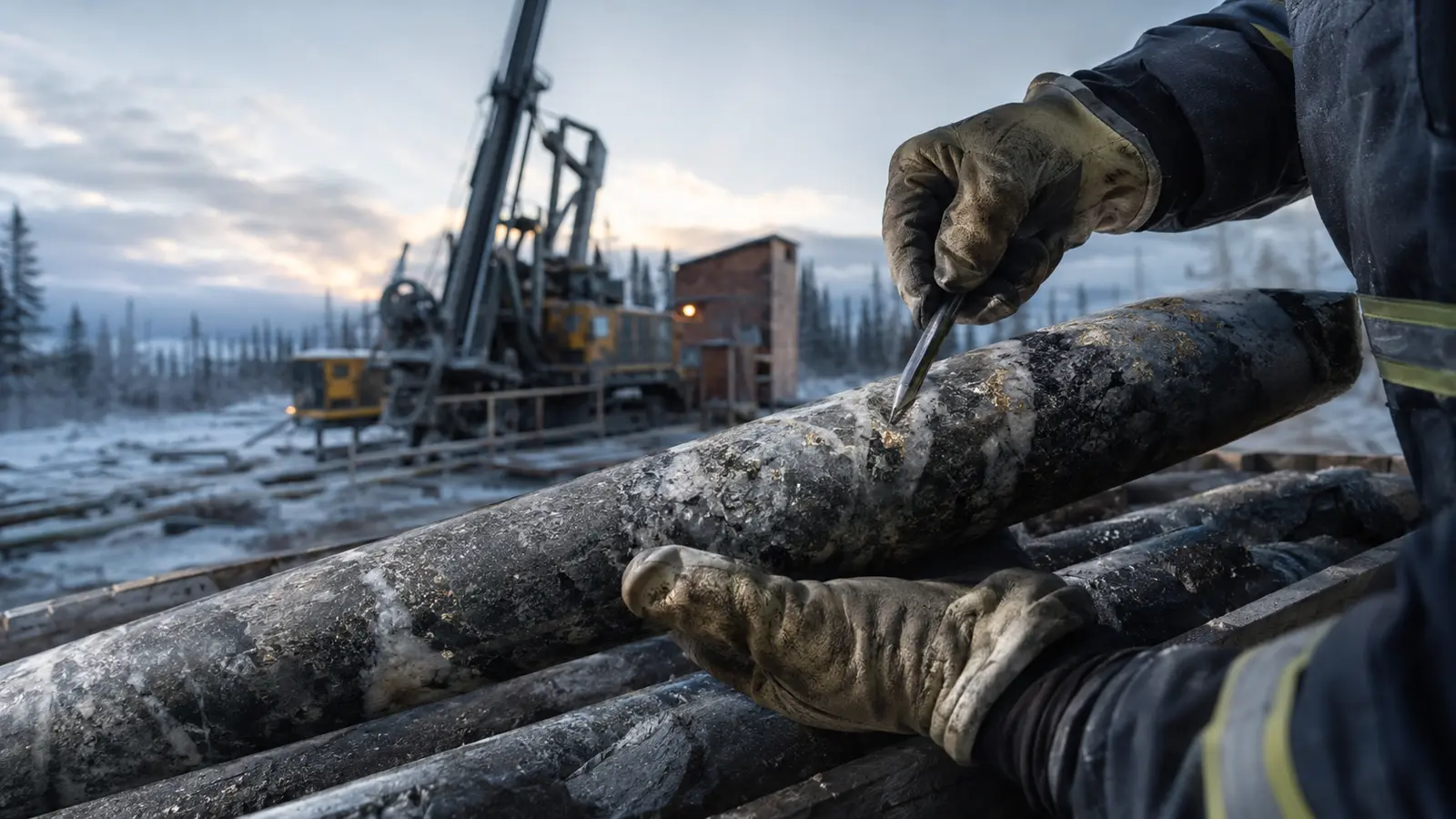
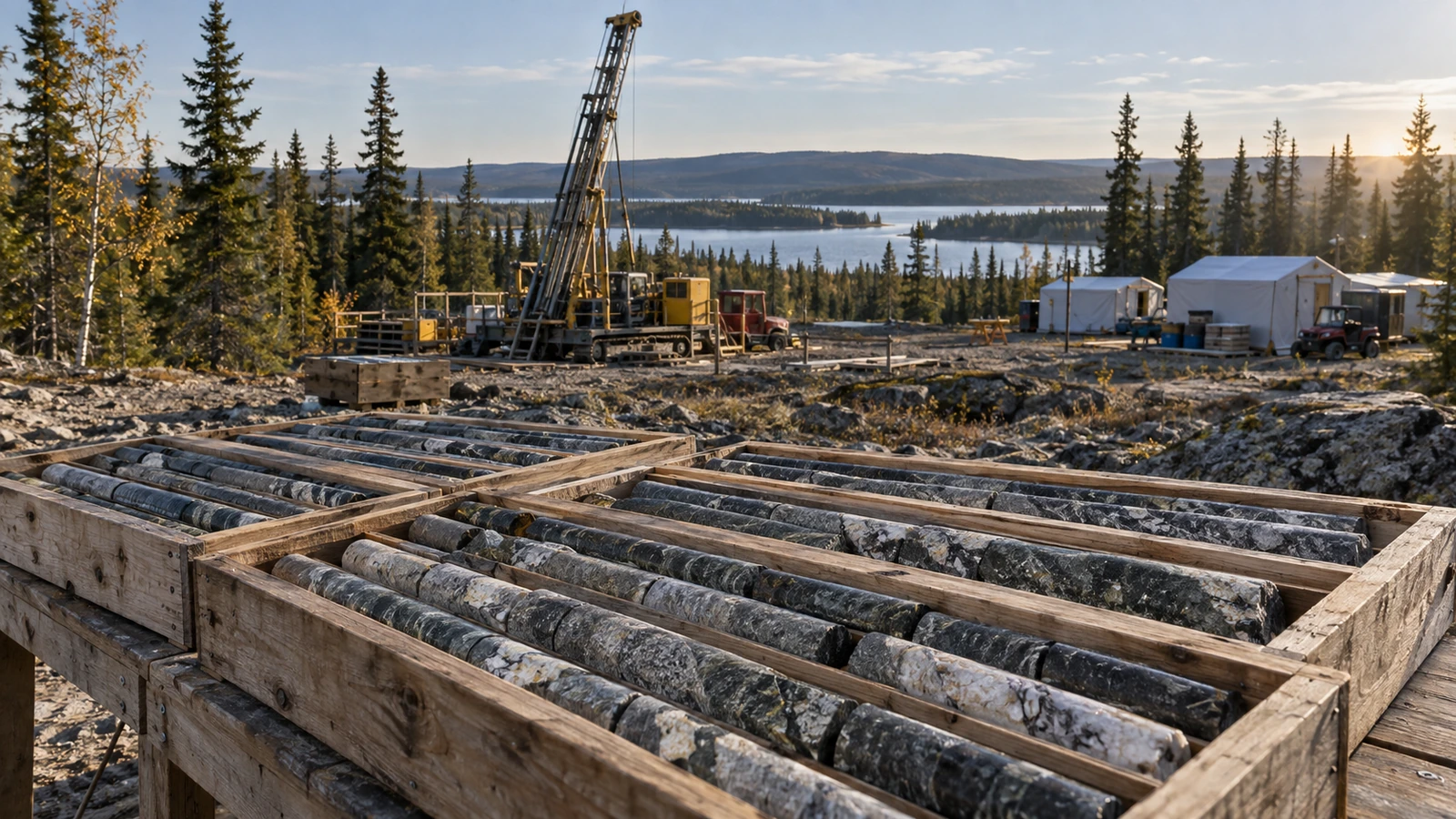
Conceptual editorial illustration; not a photograph of company assets or personnel.
- O’Brien is Radisson’s wholly owned gold project in Québec’s Abitibi region.
- Agnico Eagle’s C$57.16 million strategic investment closed on September 1.
- Step-out drilling and planned underground exploration address complementary technical goals.
A focused company with a defined flagship project
Radisson Mining is advancing its 100%-owned O’Brien gold project in Québec’s Abitibi region. The company’s work is concentrated on understanding a larger mineralized system around and beneath the historic mine, while preparing information needed to evaluate future development.
That focus gives the company a clear operating agenda. Drilling improves geological knowledge; resource estimation organizes the results; and planned underground exploration is intended to provide additional information from closer to the mineralization. Each activity supports the same flagship asset.
The recent company story has become more substantial because technical progress is now accompanied by a completed strategic investment. That creates a practical connection between the next work program and the financing designated to support it.
Resource growth gives the exploration work a measurable result
Radisson’s March 2026 resource update estimated 0.63 million indicated gold ounces in 3.49 million tonnes at 5.59 g/t, plus 1.69 million inferred ounces in 10.37 million tonnes at 5.08 g/t. Indicated ounces increased 8% and inferred ounces increased 82% relative to the comparison estimate used in the release.
The estimate, prepared by SLR Consulting, was effective January 31, 2026 and used a 2.2 g/t gold cutoff and US$2,500-per-ounce gold assumption. The indicated and inferred categories represent different levels of geological confidence and are kept separate here. Mineral resources are not mineral reserves and do not establish economic viability.
The constructive development is that the drilling program has already contributed to a larger formal inventory. That gives future exploration a defined starting point and makes subsequent additions easier to place within the company’s technical progression.
Sources: [2]
The vein model helps explain the exploration strategy
Radisson’s February geological-model update described repeated intersections of the characteristic O’Brien quartz-sulphide-gold veins across the project. The company reported an 84% success rate for the drill results covered by that update in intersecting mineralization with grades and thicknesses consistent with its resources.
The importance of a geological model is its ability to guide the next hole. A useful interpretation connects the orientation of veins, their continuity and the position of mineralized shoots. As new drilling confirms or refines those relationships, the exploration team can direct work more precisely.
Cornerstone’s assessment is that this is a meaningful part of Radisson’s progress. The company is building an explanation for where the mineralization continues, making the program more than a succession of individual assays. The model provides the context in which later gap and step-out drilling can be understood.
Sources: [6]
Gap drilling is adding continuity to the picture
On September 2, Radisson reported six new wedge holes in the Trend 1–Trend 2 Gap, all returning significant gold intersections. Highlights included 52.34 g/t over 3.0 metres and 10.62 g/t over 4.7 metres. These are core lengths; the release estimated true widths at 30–80% of reported length.
The area covers roughly 800 metres vertically in a previously under-drilled part of the model. Radisson said 13 of 15 holes across the broader gap program had returned grades and thicknesses consistent with its mineral resources. Eight drill rigs were active at O’Brien as part of the 140,000-metre step-out program.
The positive implication identified by management is improved understanding of continuity between previously separated trends. That can inform future resource modeling and the evaluation of underground layouts. The results add information in an area where drill coverage had been limited.
Sources: [3]
Agnico Eagle’s investment has moved through closing
Radisson announced on September 1 that Agnico Eagle’s investment had closed. Agnico Eagle purchased 53.42 million units at C$1.07 each for gross proceeds of C$57,159,400. Each unit included a share and half a warrant, with whole warrants exercisable at C$1.39 for five years.
At closing, Agnico Eagle held approximately 10.45% of Radisson’s shares on a non-diluted basis and approximately 14.90% on a partially diluted basis. The transaction remained subject to final TSX Venture Exchange acceptance, as stated in the closing release.
The designated use of proceeds is an advanced underground exploration program. In Cornerstone’s view, the constructive feature is the combination of an identified strategic shareholder and capital tied to a defined technical purpose. The existing step-out drilling program continues with funding from Radisson’s earlier cash resources.
Sources: [1]
The team and the underground work ahead
President and CEO Matt Manson brings experience leading Marathon Gold’s Valentine project and Stornoway Diamond’s Renard project. Hubert Parent-Bouchard is chief financial officer. Dave Ross, vice president for exploration, has more than 25 years of resource-estimation and exploration experience, including roles at Calibre and Marathon Gold. Gabriel Chagnon oversees site services, and Kristina Pillon manages investor relations.
These responsibilities match the company’s expanding workload. The proposed underground program includes an access ramp, related infrastructure and water-management facilities. Radisson said engineering and permitting work would begin as part of the preparation.
The purpose is to collect geological, geotechnical and operational information for evaluating mining options. Underground exploration remains a distinct stage before a production decision. The positive development is a more concrete program, with designated funding and a team whose responsibilities cover technical work, finance and site execution.
A clearer sequence for the next phase
Radisson’s progress now has a coherent sequence: a larger resource estimate, continued drilling to test extensions and continuity, and funded preparation for underground exploration. The company has supplied evidence at each step, allowing readers to see how the pieces relate to O’Brien’s future evaluation.
Cornerstone’s assessment is that the combination strengthens the company profile. Technical results have more context when they connect with a geological model, while a development program becomes more concrete when its funding and purpose are identified. The next updates can be measured against that sequence.
Useful milestones include engineering progress, permitting submissions, access preparation and further resource work. Together, they describe an exploration company building a more detailed basis for future decisions. The investment is reported as a completed financing; underground work and later development outcomes remain future stages.
Primary sources
- Radisson — Strategic investment closing, September 1
- Radisson — Updated mineral resource estimate, March 2
- Radisson — Trend 1–Trend 2 Gap drilling, September 2
- Radisson — Current leadership team
- Radisson — Advanced underground exploration investment, August 24
- Radisson — Geological model at O’Brien, February 12
This article is informational and is not investment advice or a recommendation to buy or sell securities. Forward-looking statements involve risks and uncertainty. Readers should review the original source and report factual concerns through our corrections page.