This article was selected without issuer payment or pre-publication approval and prepared under Cornerstone Market Intelligence editorial standards. The source material used is linked on this page.
- All six new wedge holes at O’Brien returned significant gold intercepts, including 52.34 g/t over 3.0 metres in the under-drilled Trend 1–Trend 2 Gap.
- Radisson Mining Resources reported results from six wedge holes in the Trend 1–Trend 2 Gap at its O’Brien gold project in Quebec. All six returned significant gold intercepts, led by 52.34 g/t gold over 3.0 metres in OB-26-386W4, including 154.95 g/t over 1.0 metre.
- Other reported results included 10.62 g/t gold over 4.7 metres in OB-26-387W7 and 6.14 g/t over 3.7 metres in OB-26-386W6. The intervals are reported as core lengths, so additional interpretation is required before they can be treated as true widths.
The development
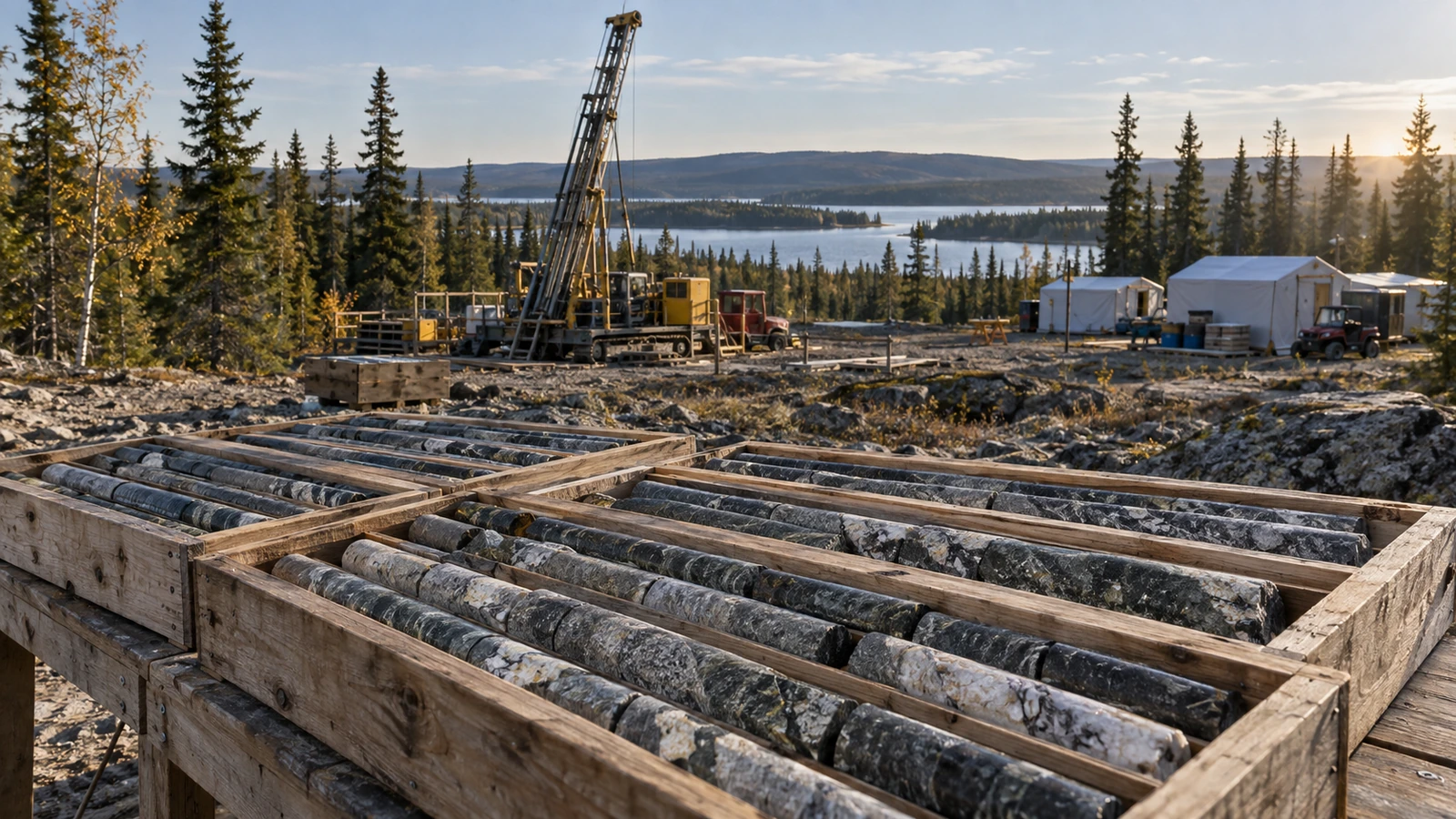
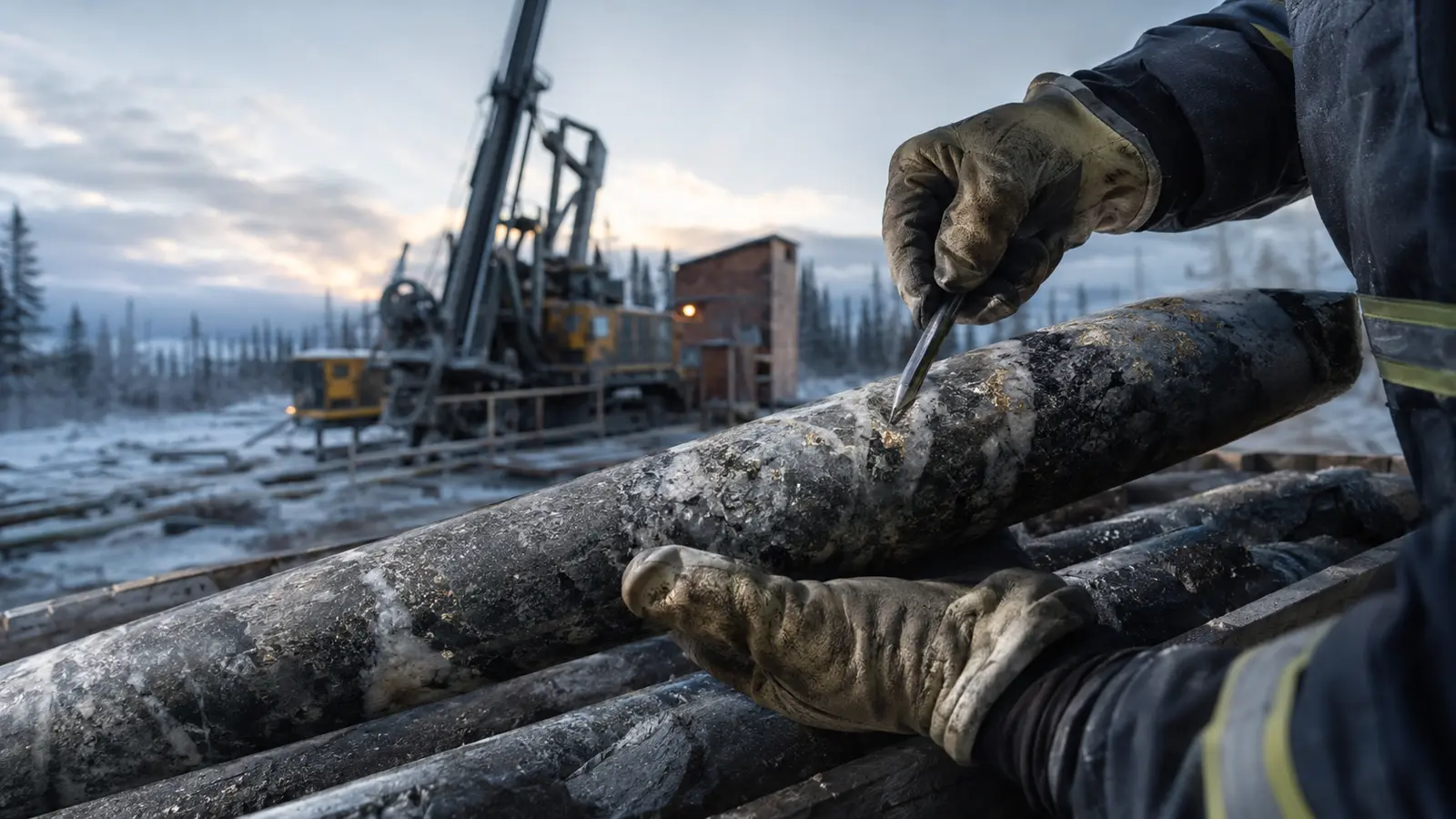
Radisson Mining Resources reported results from six wedge holes in the Trend 1–Trend 2 Gap at its O’Brien gold project in Quebec. All six returned significant gold intercepts, led by 52.34 g/t gold over 3.0 metres in OB-26-386W4, including 154.95 g/t over 1.0 metre.
Other reported results included 10.62 g/t gold over 4.7 metres in OB-26-387W7 and 6.14 g/t over 3.7 metres in OB-26-386W6. The intervals are reported as core lengths, so additional interpretation is required before they can be treated as true widths.
The gap extends through an approximately 800-metre vertical area that previously had limited drilling. Radisson said thirteen of fifteen recent holes in this target area have intersected grades and thicknesses consistent with the current mineral-resource model.
The company is completing a 140,000-metre step-out program designed to add mineralization outside the March 2026 resource estimate. Radisson reported an 82% incidence of plus-3 g/t intercepts across its broader step-out results since December 2024, based on the company’s own cutoff and reporting methodology.
Filling a gap between modeled trends could have more value than adding isolated ounces because continuity may simplify future underground layouts. That benefit remains conceptual until the new holes are incorporated into an updated resource and mine plan.
Why this matters
The six-for-six result supports the interpretation that part of the modeled gap reflects insufficient drilling rather than an absence of mineralization.
High-grade parallel zones could improve resource density if continuity is confirmed and incorporated into future estimates.
Industry and company context
O’Brien is a high-grade gold project in Quebec’s Abitibi region with a current resource model and a 2025 preliminary economic assessment.
Radisson is using directional wedge drilling to test deep targets from common pilot holes more efficiently.
How to evaluate the update
The strongest evidence is the repeat hit rate across multiple wedge branches, not the single highest-grade metre.
An updated resource should show whether the new zones bridge Trends 1 and 2 with sufficient continuity for practical mine design.
Execution and risk considerations
Narrow high-grade veins can be structurally complex, and core lengths may differ materially from true widths.
Resource additions may not translate directly into mineable reserves or improved project economics.
What to watch next
- Further wedge results from the Trend 1–Trend 2 Gap.
- Updated structural interpretation and true-width estimates.
- Inclusion of the gap drilling in a future mineral-resource update.
Cornerstone perspective
Radisson’s latest drilling strengthens the continuity case in a part of O’Brien that previously weakened the block model.
The decisive milestone will be a resource update that shows how much of the gap can be converted into connected, mine-plan-relevant tonnes.
This article is informational and is not investment advice or a recommendation to buy or sell securities. Forward-looking statements involve risks and uncertainty. Readers should review the original source and report factual concerns through our corrections page.