Source-linked company news and Cornerstone analysis. Sources checked September 14, 2026.
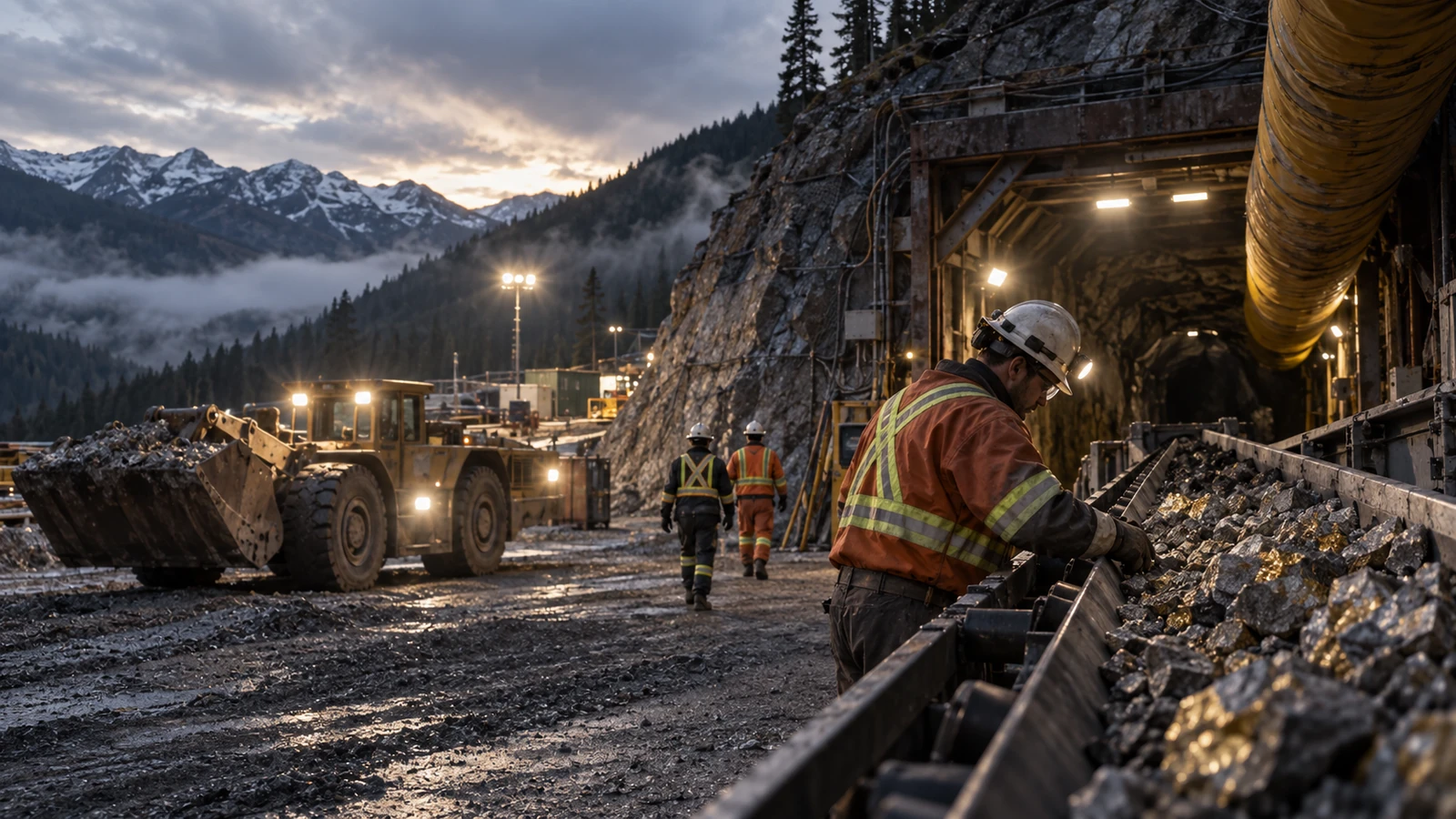
Conceptual editorial illustration assembled for Cornerstone Market Intelligence; not a photograph of the announced event or company personnel.
- Talisker reported approximately 4,884 ounces of gold produced from 19,014 tonnes through August 31.
- The company completed 2,265 metres of underground development year to date and expanded access across multiple Mustang Mine levels.
- Bralorne infrastructure work includes a new power plant, ventilation upgrades and additional accommodation capacity.
Bralorne continued producing while underground development advanced
Talisker Resources reported approximately 4,884 ounces of gold produced from 19,014 tonnes at an average grade of 7.99 g/t through August 31, 2026. The company said 18,499 tonnes had been sold at an average grade of 8.05 g/t, representing 4,788 contained ounces, with additional concentrate sales bringing total reported ounces sold to 5,558.
Talisker also reported approximately 8,100 tonnes of inventory. The operating update provides a broader view of Bralorne than a single assay release because it connects mine development, material movement and infrastructure work.
Sources: [1]
Development is opening more working areas
Year-to-date underground development totaled 2,265 metres, split between operating and capital development. The Lower Mustang Decline advanced 329 metres during 2026 and has provided access to the 1045, 1030 and 1015 levels, with multiple mineralized headings established.
At Bralorne West, total decline development reached 404 metres, including 296 metres completed in 2026. Phase 3 lateral development began in early September, adding another active area to the underground buildout.
Infrastructure is being built for a larger operating footprint
The company is installing a 1.2-megawatt power plant with redundancy and the ability to expand capacity. Ventilation upgrades are also progressing, with new fans expected to add substantial airflow, while additional accommodation has been commissioned for the site workforce.
These investments are less visually dramatic than high-grade assays, but they are essential to sustaining more headings, equipment and personnel underground. Mine growth depends on infrastructure keeping pace with geological opportunity.
Sources: [1]
The operational trend is the key metric now
Cornerstone analysisTalisker has already moved Bralorne beyond the pure exploration stage, so future results need to be judged on more than grade. Development metres, tonnes mined, recovery, ounces sold, unit costs and consistency of production become increasingly important as the operation matures.
Recent high-grade face sampling at Mustang adds geological support, while the September 14 update shows the physical mine expanding around that mineralization. The next test is whether growing access and infrastructure translate into a steadier production profile and stronger operating economics.
As the mine expands, reporting detail should gradually shift toward the operating metrics used to judge established producers. Investors will want to see how development spending converts into stope access, how mined grade reconciles with geological expectations, what recoveries are achieved and how reliably material can be processed and sold. Bralorne’s high-grade geology can attract attention, but operating consistency determines whether that geology becomes durable cash flow. The September update is useful because it begins connecting underground development with actual ounces and site capacity.
Sources and further reading
This report summarizes public company disclosures and includes Cornerstone’s analysis. It is informational and is not investment advice or a recommendation to buy or sell securities. Company plans, estimates, clinical data, exploration interpretations and forward-looking statements remain subject to execution, verification and uncertainty.