Cornerstone Marketing has a commercial relationship with VisionWave Holdings, Inc.. Read the full disclosure. Reported facts and Cornerstone’s analysis are identified below.
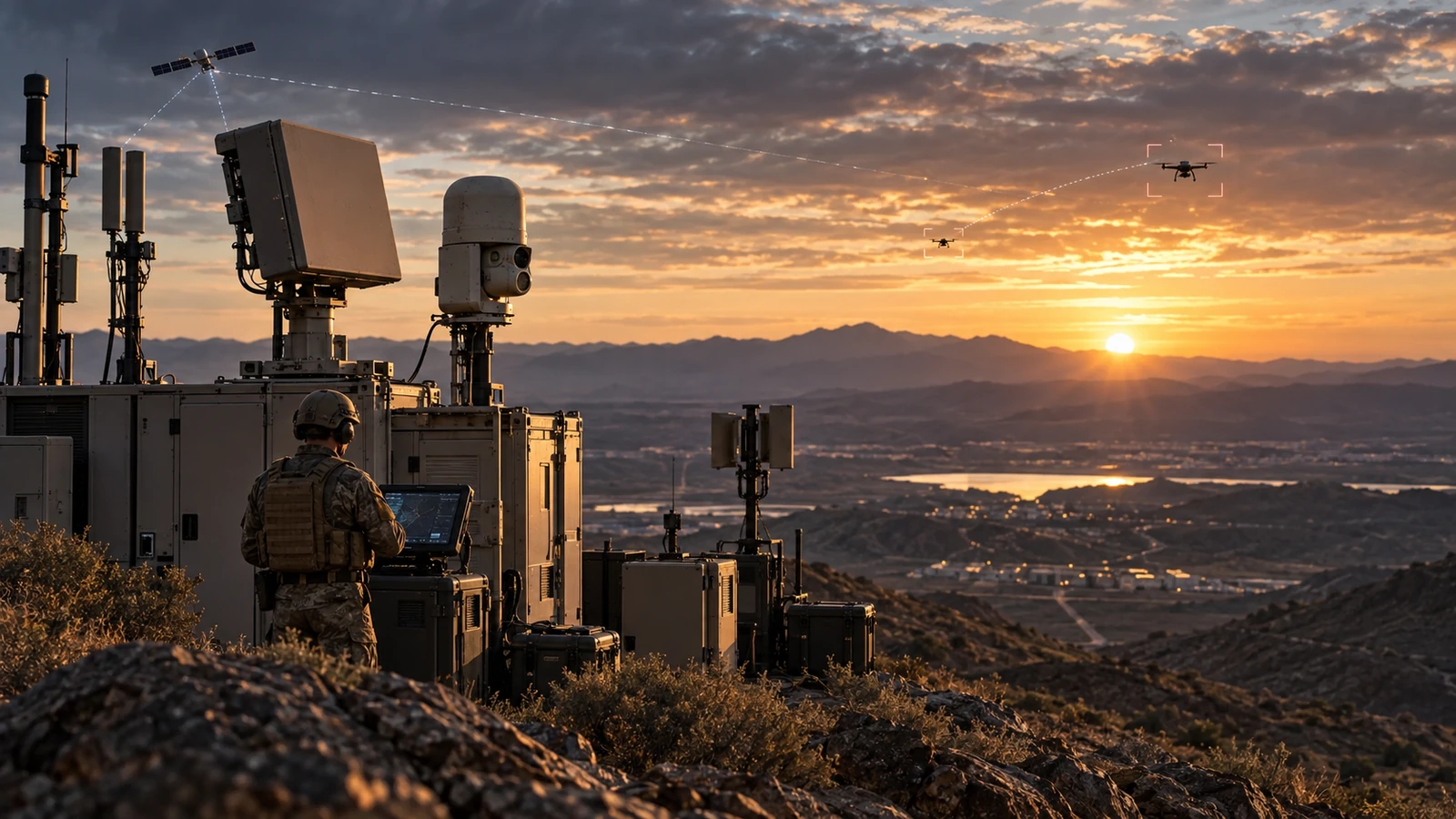
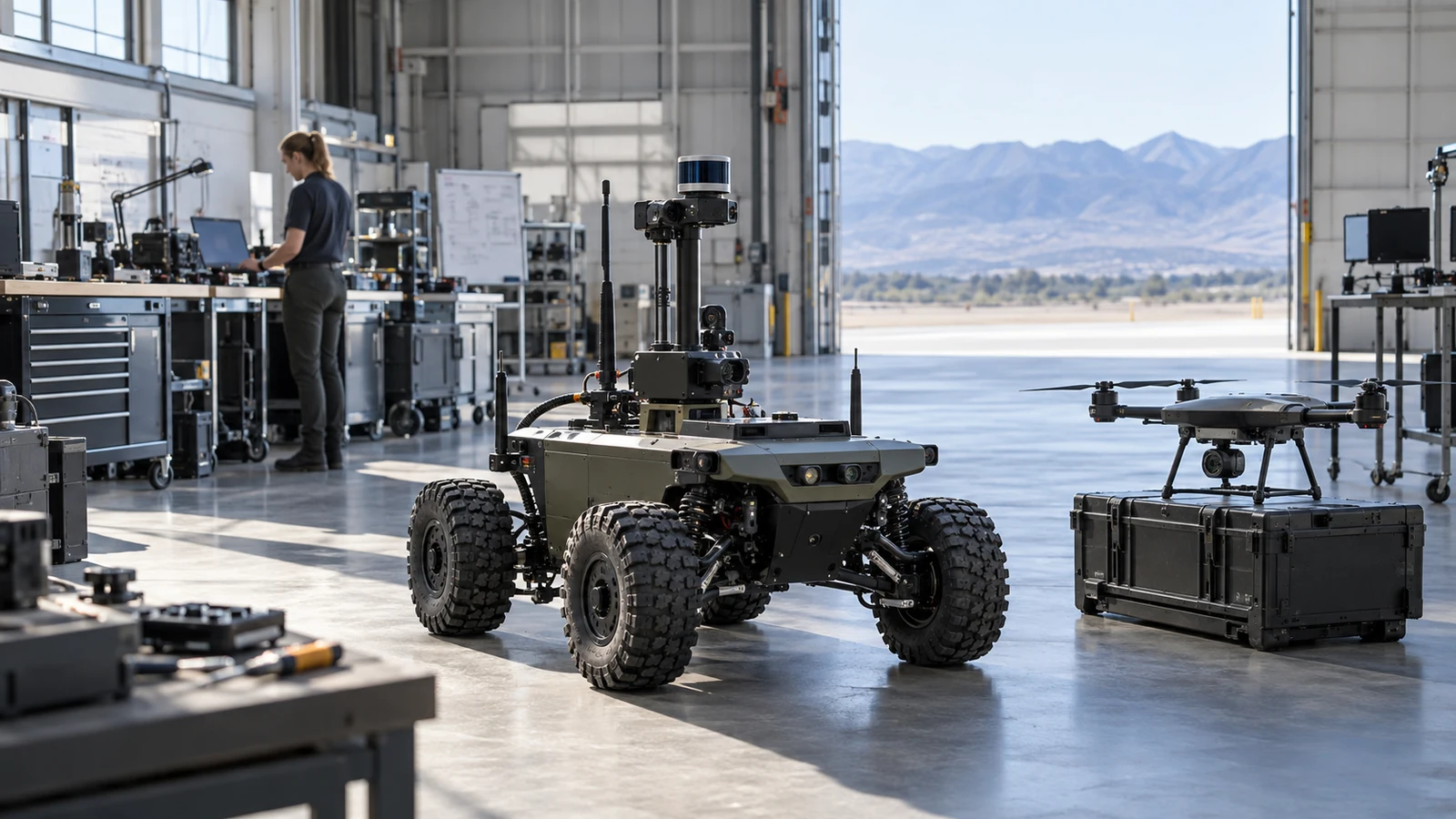
Conceptual editorial illustration; not a photograph of company assets, personnel or the announced event.
- A shared architecture connects platforms, payloads and intelligence.
- Development progress and customer validation remain the next milestones.
A clearer framework for the portfolio
VisionWave Holdings (Nasdaq: VWAV) has set out a three-layer strategy covering platforms, payloads and intelligence. Its September corporate overview, furnished with a September 8 Form 8-K and discussed in a September 10 release, groups ground vehicles, aerial systems, sensing and command software into a common architecture.
The roadmap includes VARAN and other ground programs, TALON and D-FLY aerial development, and STRATUM Command and Stratum AI. The company reported 21 issued patents and nine pending applications. Substantially all of the described technologies remain in development; the announcement is a strategic update, not confirmation of a commercially deployed ecosystem.
Sources: [1]
Why integration is the central idea
Cornerstone analysisCornerstone’s reading is that the value proposition rests on how the pieces work together. A vehicle provides mobility, a payload collects information or performs a task, and software helps an operator use the information. Combining those functions can create a more useful mission tool than evaluating each component in isolation.
That also makes integration a practical test of the strategy. Shared terminology and a broad product list are only the starting point. Demonstrations showing compatible interfaces, reliable information exchange and repeatable operation would give readers stronger evidence of progress. The relevant question is how effectively the system supports a real task under realistic operating conditions.
A partnership offers an example of the approach
Foresight’s August 20 announcement provides a concrete example of the intended integration work. The companies established a cooperation framework to combine Foresight’s visible-light and infrared 3D perception with the VARAN ground platform. Planned activities include demonstrations, customer evaluations and business development, initially including several Asian markets.
Foresight also specified that individual development programs, manufacturing arrangements and commercial terms would require further definitive agreements. That distinction makes the partnership useful context for the new roadmap while keeping the commercial stage clear. It establishes a route for collaboration; it does not establish a production order or guarantee future sales.
Sources: [2]
What would demonstrate the next step
Cornerstone analysisFor readers following the company, the most informative next updates would connect technical progress with named applications: which components have been integrated, what testing has been completed, and whether prospective users have moved from evaluation to an agreed program. Those are more useful checkpoints than the number of technologies listed in a presentation.
The strategic significance of this update is its clearer organizing framework. It gives the market a way to follow the relationship between hardware, sensing and software over time. Execution can then be assessed against that framework, with demonstrated capabilities, customer commitments and commercial delivery treated as distinct stages.
Sources and further reading
This report summarizes public company disclosures and includes Cornerstone’s analysis. It is informational and is not investment advice or a recommendation to buy or sell securities. Company plans and expectations remain subject to execution and uncertainty.