A detailed review of the business, leadership and publicly reported progress. Sources checked September 5, 2026.
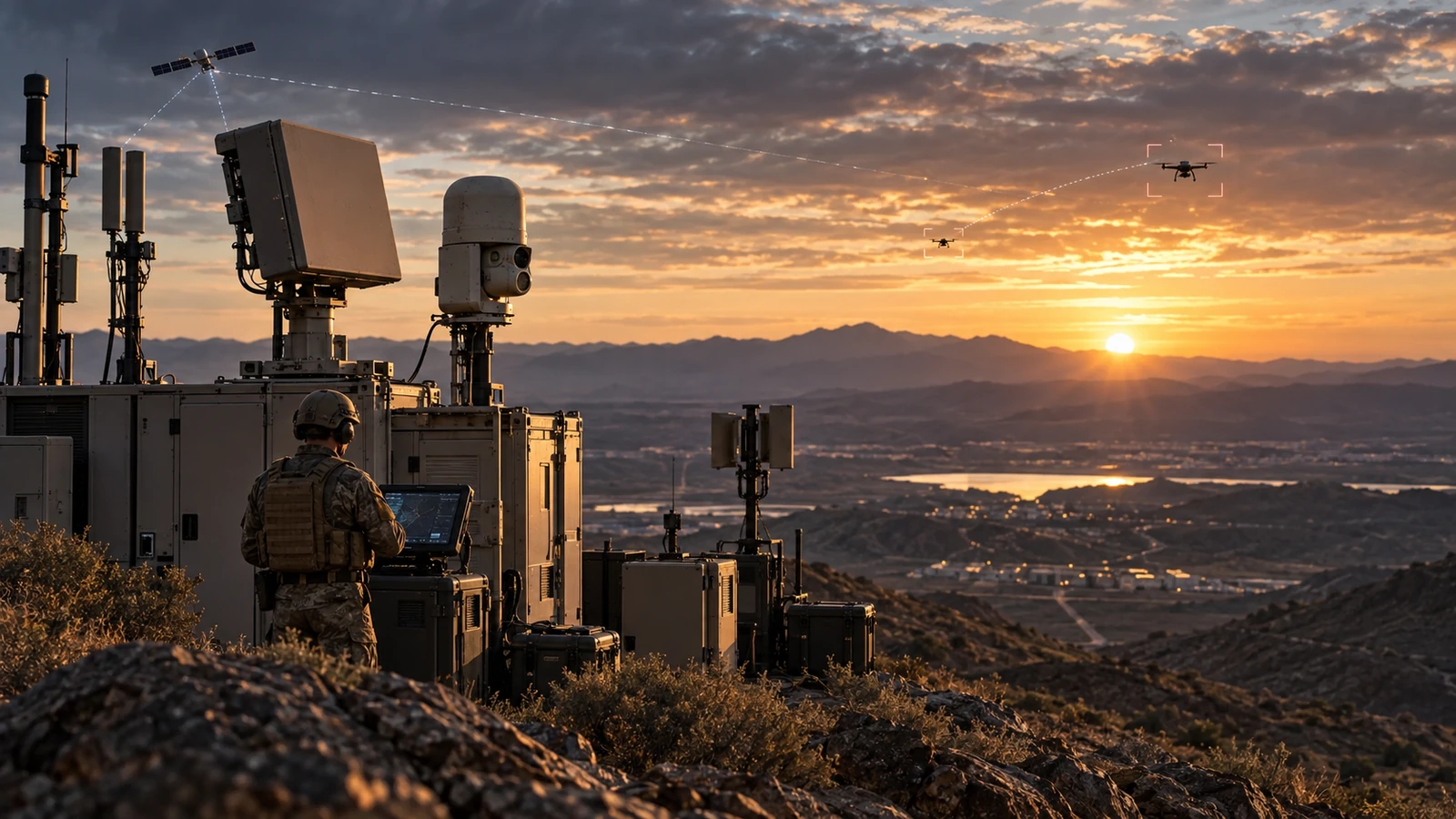
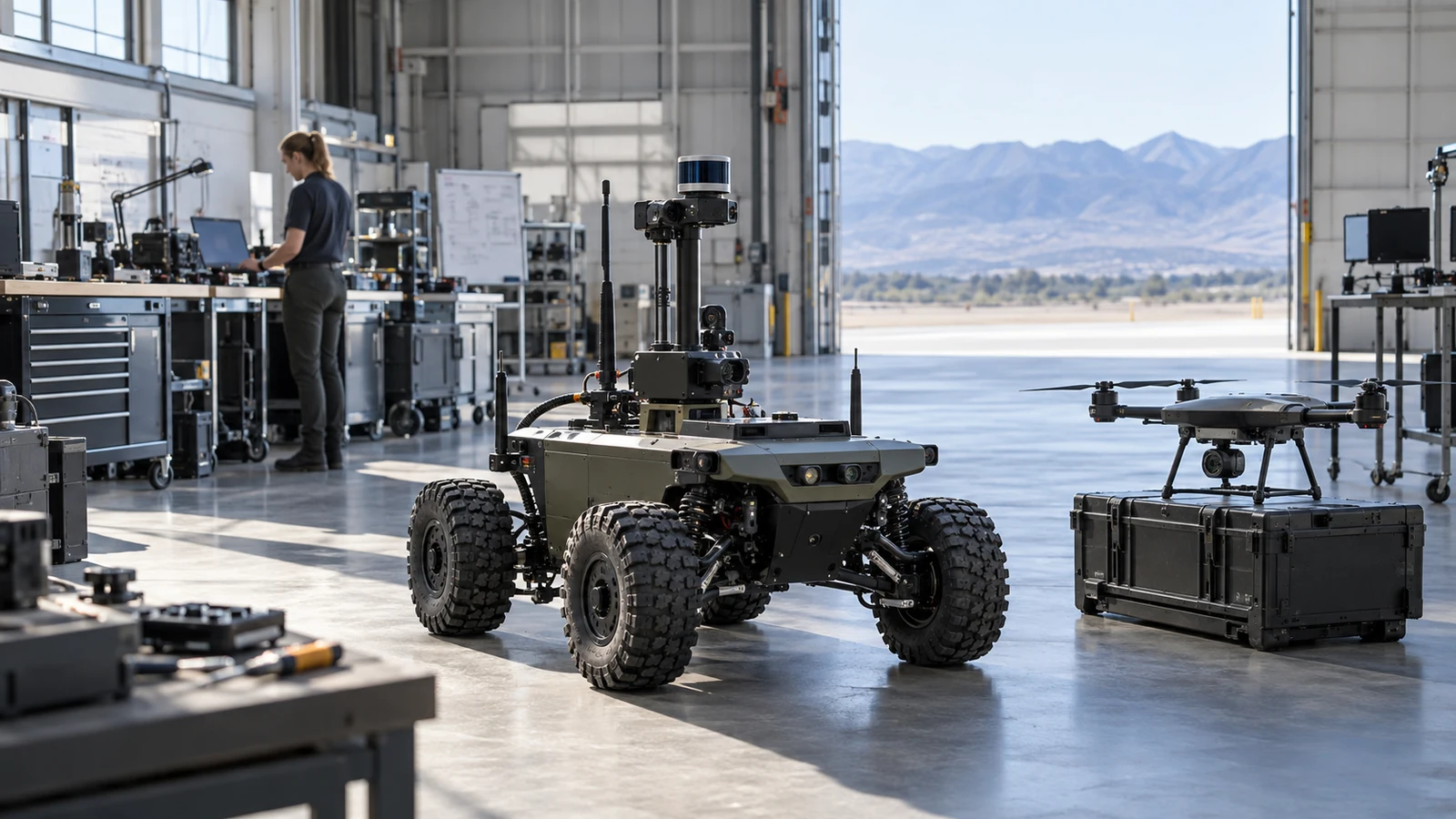
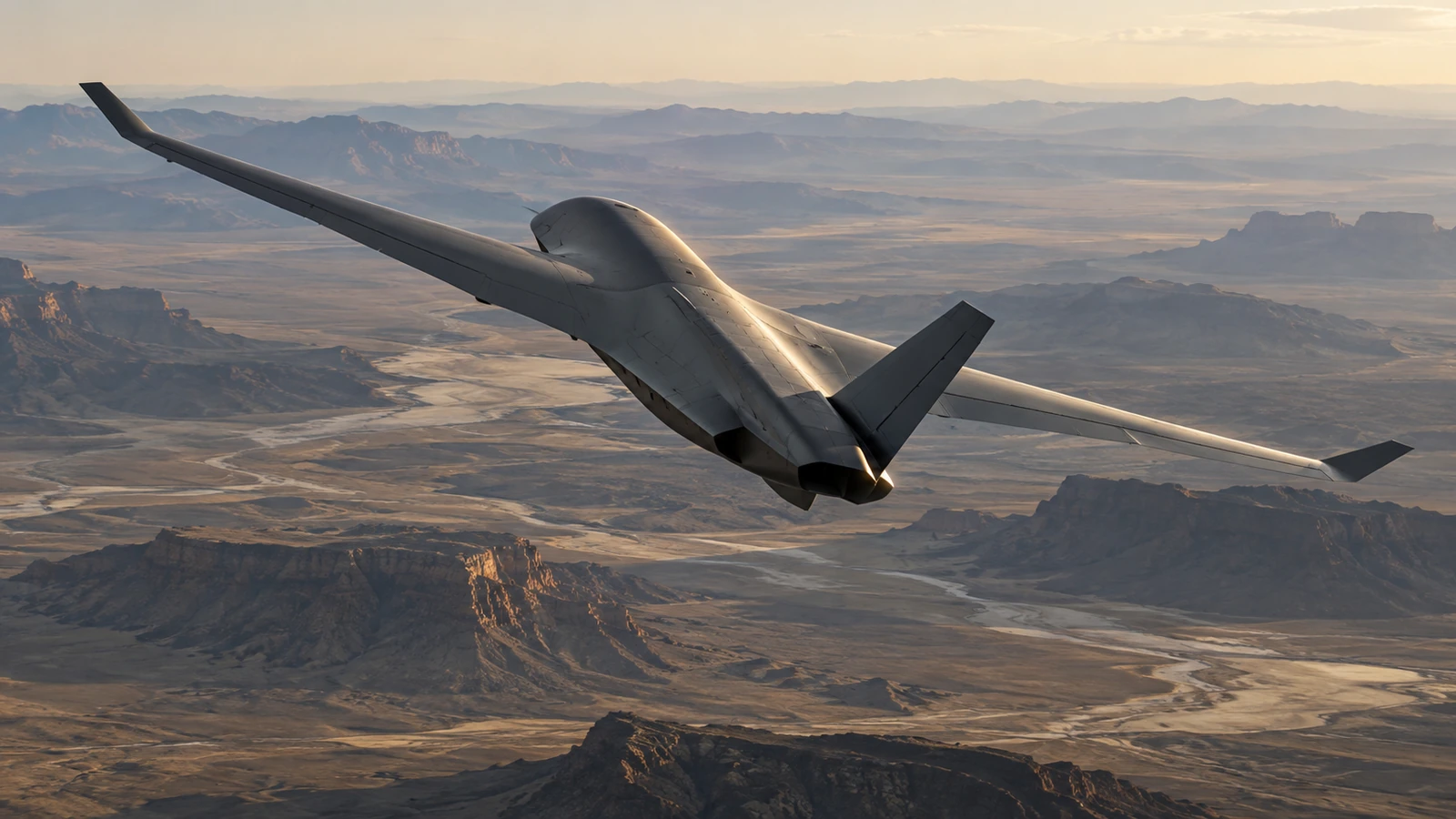
Conceptual editorial illustration; not a photograph of company assets or personnel.
- Kratos serves several layers of the defense supply chain.
- Q2 revenue grew 30.5%, including 19.1% organic growth.
- Valkyrie flight integration and Spartan engine manufacturing provide distinct examples of execution.
Understanding the company behind the aircraft
Kratos is often associated with unmanned aircraft, but its business also spans propulsion, space systems, microwave electronics, hypersonics and related mission capabilities. That broader portfolio is essential to understanding the company. An aircraft is the visible platform; engines, communications, control systems and testing are part of the industrial work that makes a mission possible.
The company therefore has opportunities to serve a customer as a platform supplier, an equipment provider or a participant in a larger program led by another contractor. That variety gives this profile a different emphasis from a single-product story. The central question is how Kratos is combining engineering with practical manufacturing and customer integration.
Sources: [2]
A business model built around several customer needs
Kratos’s operating capabilities connect development, test activity and production. Its portfolio includes aerial targets as well as tactical uncrewed aircraft, alongside hardware and systems used in other national-security applications. These are distinct customer requirements, even when they draw on related technical expertise.
Cornerstone’s interpretation is that this range creates several points of participation in a defense program. A customer may need a complete vehicle, a propulsion system or an electronic subsystem. Another may require equipment that supports training or evaluation. Successful delivery in one area can establish practical working relationships for future requirements.
The constructive feature is the ability to discuss the company through actual functions rather than a single broad defense theme. Engineering breadth has business value when it helps solve defined customer problems and supports repeatable orders.
Sources: [2]
Measured growth across the operating business
Kratos reported US$458.8 million in second-quarter 2026 revenue, up 30.5% from the prior year. Organic growth, which excludes acquisition effects, was 19.1%. Government Solutions generated US$379.7 million and Unmanned Systems generated US$79.1 million. The quarter also produced US$492.2 million in bookings.
The company’s consolidated backlog reached US$2.084 billion. It raised full-year revenue guidance to US$1.750–US$1.810 billion, a management forecast rather than an achieved result. These figures distinguish current delivery activity from future contracted work and expected performance.
For readers following the company’s progress, the organic growth measure is particularly useful because it shows expansion within the existing business. The combined results demonstrate activity across both reported segments, supporting a wider operating story than any one aircraft or award.
Sources: [1]
Valkyrie: integration demonstrated in flight
In an August 18 release, Kratos described a US Marine Corps Valkyrie demonstration conducted in April 2026. The aircraft demonstrated electronic-warfare capabilities and command and control beyond direct line of sight. It operated with Marine Corps F-35s and an F/A-18 before returning autonomously to its recovery point.
The test involved military evaluation teams, Kratos, Northrop Grumman and Autonodyne. This detail matters because an aircraft’s usefulness depends on its ability to work with operators, communications and other mission systems. Demonstrating that interaction is a substantive engineering checkpoint.
The positive development is specific: a configured aircraft carried out coordinated test objectives in flight. That is a stronger basis for describing progress than treating a design concept as a deployed capability. Follow-on integration work can build on the information generated by the demonstration.
Sources: [4]
Spartan engines connect manufacturing with a customer program
Kratos’s August 24 update said it was allocating expanded Spartan J85 engine capacity to support Boeing’s JDAM Long Range production program. The engines are produced at its operational 22,500-square-foot facility in Auburn Hills, Michigan. Kratos also described purchases of long-lead components to support production for several applications in 2027.
The link between an operating facility, procurement activity and an identified customer program makes this a useful example of manufacturing progress. The US$75 million award discussed in the release was awarded to Boeing; it is not presented here as a Kratos contract value.
In Cornerstone’s assessment, the business significance lies in preparation meeting a defined production requirement. Procurement and facility readiness are practical steps toward delivery. They show what the company is doing behind the headline to support a larger volume of work.
Sources: [5]
Who is responsible for the next phase
Eric DeMarco is president and chief executive officer. Deanna Lund is executive vice president and chief financial officer. Steve Fendley leads the Unmanned Systems Division, while Phil Carrai leads Space, Training and Cyber. Other division presidents include Dave Carter for Defense and Rocket Support Services, Yonah Adelman for Microwave Electronics and Stacey Rock for Turbine Technologies.
The leadership structure reflects the breadth of the portfolio. Aircraft, propulsion, electronics and space activities require different technical disciplines and customer relationships. Dedicated division leadership gives each operating area a defined point of responsibility while the corporate team manages the broader company.
For this profile, the useful connection is between roles and reported progress: production, integration and customer delivery all require coordinated decisions across those teams. The people involved are therefore part of the operating explanation, rather than simply a list of names.
Sources: [3]
What constructive follow-through would look like
The next phase can be followed through three kinds of evidence: completed deliveries, additional customer integration and the conversion of booked work into recognized revenue. Each describes a different step in the operating process. Together, they provide a practical way to evaluate whether the business is becoming more repeatable as it expands.
Cornerstone’s assessment is that Kratos’s recent updates are strongest when read together. The financial release describes the scale of activity, the Valkyrie announcement illustrates mission integration, and the Spartan update explains manufacturing preparation. The company has supplied concrete examples from different parts of its business.
The resulting company story is one of technical capabilities being organized around customer requirements and production. Continued evidence along that sequence would make future updates more informative than simply counting new announcements. All dollar figures in this feature are in US dollars.
Primary sources
This article is informational and is not investment advice or a recommendation to buy or sell securities. Forward-looking statements involve risks and uncertainty. Readers should review the original source and report factual concerns through our corrections page.