This article was selected without issuer payment or pre-publication approval and prepared under Cornerstone Market Intelligence editorial standards. The source material used is linked on this page.
- Kratos said its target systems were used during the successful Missile Defense Agency Joint Flight Test Experiment-01 mission.
- Kratos Defense & Security Solutions announced that its target systems were used during the Missile Defense Agency’s Joint Flight Test Experiment-01 mission.
- The company described the mission as successful and presented its target-system participation as support for a complex test environment involving the Missile Defense Agency and joint participants.
The development
Kratos Defense & Security Solutions announced that its target systems were used during the Missile Defense Agency’s Joint Flight Test Experiment-01 mission.
The company described the mission as successful and presented its target-system participation as support for a complex test environment involving the Missile Defense Agency and joint participants.
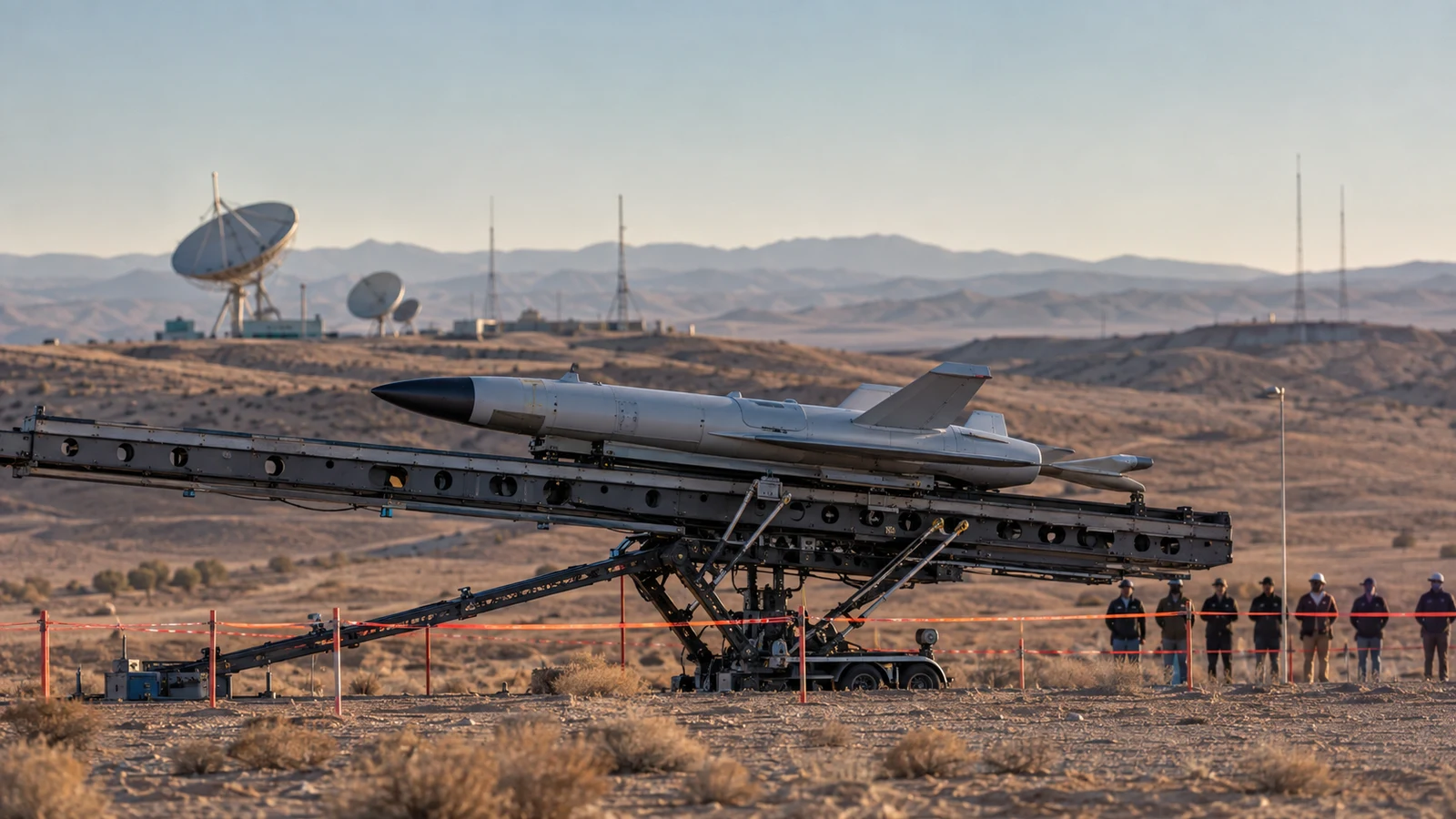
Target vehicles provide representative airborne or missile-like threats so sensors, command systems and defensive technologies can be exercised under controlled conditions. Their value depends on reproducing the required performance and test geometry reliably.
The August 10 release does not disclose a new contract award or contract value. Participation in a successful test is an execution milestone, but it should not be presented as a separate revenue event without additional disclosure.
Why this matters
Successful use in a joint flight-test event adds an operating reference for Kratos’s target-systems business and its role in advanced defence testing.
The commercial significance depends on follow-on tasking, program continuity and whether demonstrated performance supports future target or test-service awards.
Industry and company context
Kratos supplies aerial target systems used to test sensors and defensive systems against representative threat profiles. The business sits within a broader portfolio of uncrewed systems and defence technologies.
Flight-test outcomes reflect the combined performance of many government and industry participants. Kratos’s announcement identifies its own target-system contribution without assigning the overall mission result to a single supplier.
How to evaluate the update
Investors should distinguish technical participation from a new booking. Useful follow-up disclosure would identify the underlying contract vehicle, tasking scope and any future mission schedule.
Repeat selection, mission reliability and production capacity are more informative over time than one successful event in isolation.
Execution and risk considerations
Defence test schedules can move because of range availability, technical readiness, funding or changing government priorities.
Program participation may not translate into a new award, and contract values or margins can vary materially across target configurations and test requirements.
What to watch next
- Follow-on MDA or joint test missions involving Kratos targets.
- New target-system awards or funded task orders.
- Disclosure on production capacity and delivery timing.
- Evidence that flight-test performance supports repeat selection.
Cornerstone perspective
This is an execution credential rather than a booking announcement. It shows that Kratos hardware supported a successful test environment, while leaving the financial impact unspecified.
The strongest confirmation would be repeat tasking and transparent contract disclosure tied to subsequent missions.
This article is informational and is not investment advice or a recommendation to buy or sell securities. Forward-looking statements involve risks and uncertainty. Readers should review the original source and report factual concerns through our corrections page.