Cornerstone Marketing Inc. has a commercial relationship with this company. This in-depth review is provided as part of that broader relationship; no separate publication fee is charged for an individual newsroom article. The commercial relationship does not remove our sourcing, byline, date, correction or disclosure requirements.
- VisionWave is building a portfolio of proprietary sensing, communications and AI technologies rather than relying on one product line.
- STRATUM provides an umbrella for technologies that can be used across defense, homeland security and infrastructure applications.
- Strategic cooperation and international partners are giving VisionWave routes to integrate and commercialize the technology.
The most important 2026 development is the breadth of the IP stack
VisionWave has spent 2026 building intellectual property across several layers of an autonomous and sensing system. That includes AI video intelligence through xCalibre, distributed-machine intelligence through SDNN, resilient communications through SkyWeave and subsurface RF sensing through DeepWave RF.
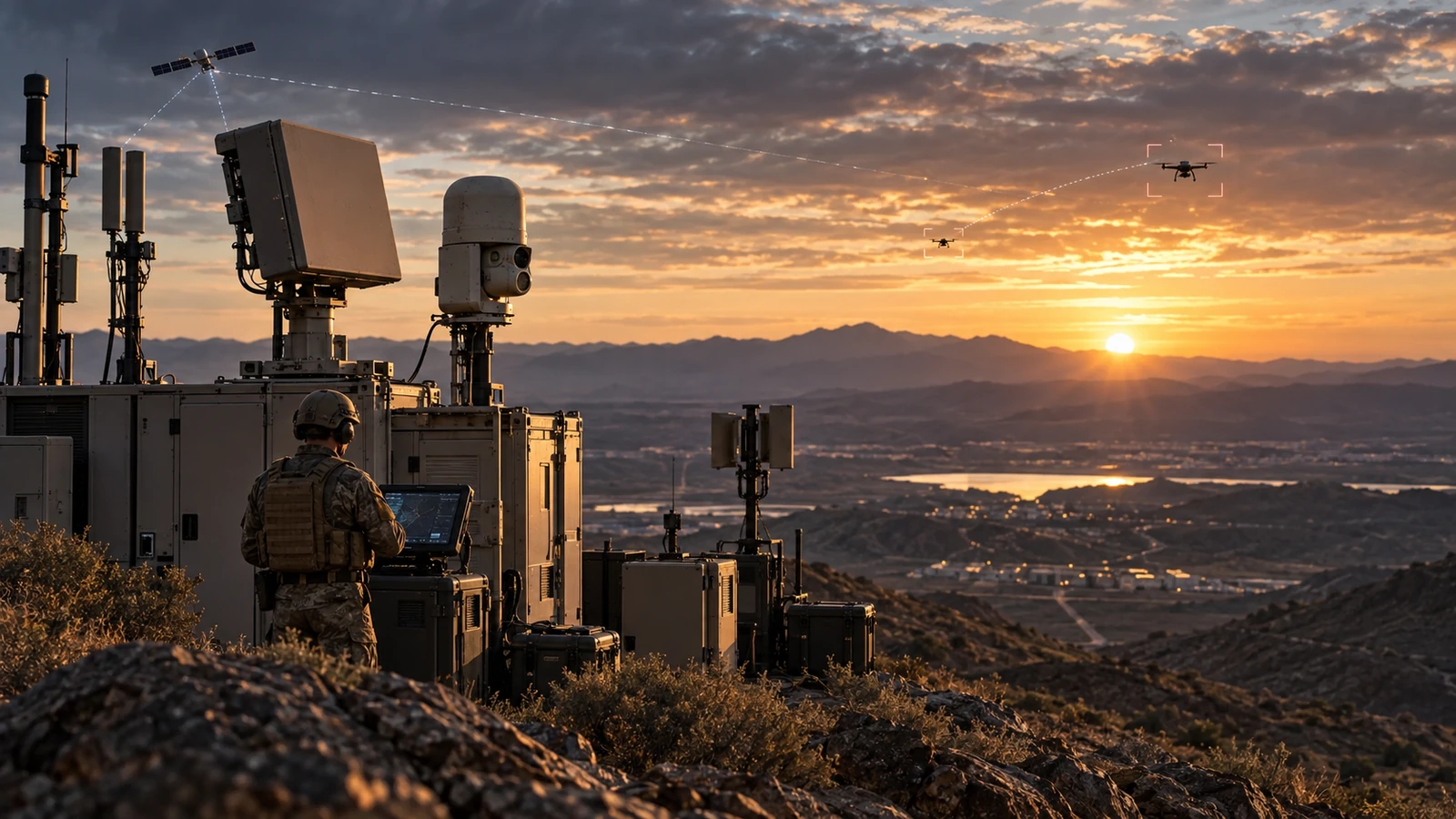
These technologies address different technical problems, but they share a common architecture: collect more useful information, process it closer to where it is generated and give autonomous or human operators better data for decision-making.
A broader IP stack can be strategically valuable because it creates more combinations of products and markets. A defense customer may care about autonomous navigation and threat detection, while an industrial customer may care about subsurface imaging. The underlying expertise in RF, AI and edge processing can support both.
xCalibre gives VisionWave an AI video-intelligence foundation
VisionWave acquired the xCalibre AI video-intelligence IP portfolio in April and later outlined a roadmap for integrating the technology into autonomous flight platforms. The company said the portfolio had been independently valued at approximately $60 million for financial-reporting purposes as of the acquisition date.
xCalibre is designed around edge-native analysis, allowing video and sensor data to be interpreted closer to the source rather than relying entirely on remote cloud processing. In defense applications, that can be useful when bandwidth is constrained or communications are disrupted.
The strategic appeal is that video intelligence can become one layer within a broader sensor-fusion system. VisionWave can pair it with RF sensing, autonomy software and other perception tools rather than commercializing it only as a stand-alone analytics product.
Sources: [1]
SDNN is aimed at coordinating distributed autonomous machines
VisionWave’s SDNN filing describes a Symbiotic Deep Neural Network architecture intended to coordinate fleets of machines and sensors through a continuous decision loop. The provisional application included a large technical specification and engineering drawings covering several related components.
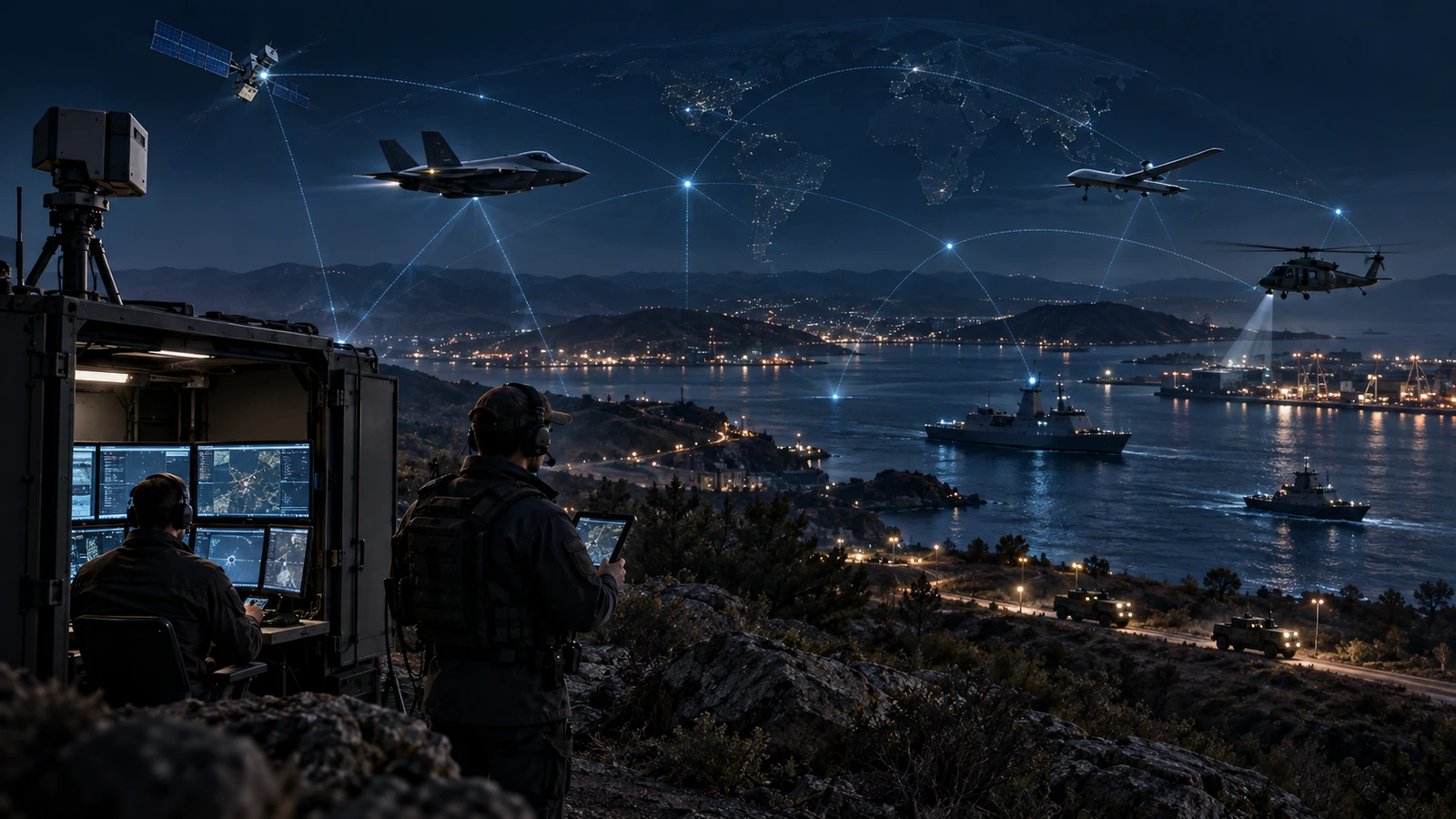
The concept includes multi-source data fusion, reasoning prioritization, node-trust scoring and degraded-mode resilience. Those capabilities are directly relevant to contested environments where autonomous systems cannot assume that every sensor or communications link will remain available.
If developed successfully, SDNN could serve as a coordination layer across multiple VisionWave products rather than being tied to one vehicle. That type of reusable software architecture is strategically attractive because improvements can potentially benefit the entire platform.
Sources: [2]
SkyWeave extends the platform into resilient communications
SkyWeave is designed as an AI-orchestrated high-frequency communications ecosystem for environments where satellites or conventional infrastructure may be unavailable. VisionWave’s July filing describes a system intended to automate aspects of HF communications that have historically required specialist operators.
Reliable communications are foundational to autonomous systems. Sensors and vehicles create less value if they cannot share data or receive mission updates. By developing a communications layer alongside sensing and autonomy, VisionWave is trying to control another critical link in the operating chain.
The technology also broadens the company’s addressable use cases beyond vehicles. Resilient long-range communications can matter to defense forces, emergency-response organizations and infrastructure operators working in remote or disrupted environments.
Sources: [3]
DeepWave shows how the same technical core can move into industry
DeepWave RF is one of the clearest examples of VisionWave applying its defense-oriented expertise to a commercial-industrial problem. The platform is being developed to use software-defined radio, near-bit sensing, edge computing and physics-informed AI to provide drilling operators with information about subsurface conditions ahead of the drill bit.
Potential applications described by the company include oil and gas, geothermal energy, mineral exploration, water detection and geological surveying. That gives VisionWave a possible route into markets where improved subsurface visibility can reduce uncertainty and improve operational decisions.
Commercial diversification is valuable because it can allow research and engineering work to serve more than one customer base. DeepWave demonstrates how VisionWave’s core competence in RF sensing and AI can potentially travel beyond defense.
Sources: [4]
STRATUM gives the expanding portfolio a common commercial identity
VisionWave’s international trademark filing for STRATUM designates the European Union, United Kingdom, Israel and United Arab Emirates. The move reflects an effort to establish a recognizable platform brand in several strategically important markets.
That branding becomes more useful as the technology portfolio grows. Customers can understand STRATUM as the overall environment while individual technologies such as xCalibre, SkyWeave or DeepWave serve specific functions within or alongside that environment.
A common platform identity can also make partnerships easier to explain. VisionWave’s cooperation with Foresight, for example, can be positioned as adding advanced stereoscopic perception to the broader autonomous-systems architecture rather than as an unrelated technology relationship.
Commercial partnerships are creating routes to market
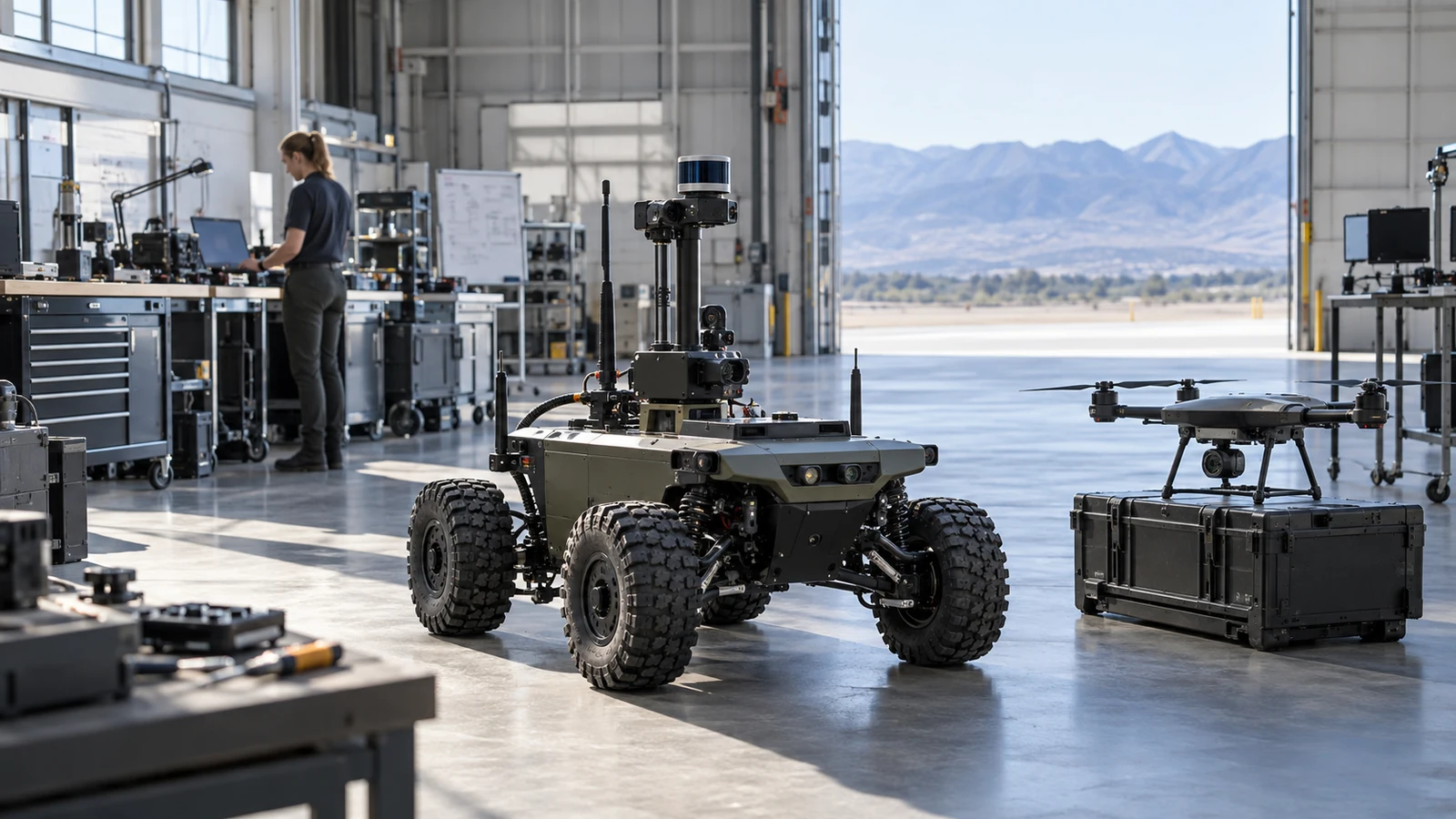
Foresight and VisionWave’s August cooperation agreement focuses on integrating Foresight’s 3D perception technology into the VARAN unmanned ground-vehicle platform and jointly pursuing opportunities in several Asian and global markets.
Stratonex provides a different type of leverage. Its agreement with VisionWave is focused on commercialization, integration and sovereign delivery in the United Kingdom, Europe and other agreed markets. That gives the company a partner whose job is not to invent another sensor, but to help put the existing technology in front of appropriate government and defense customers.
Together, these relationships show two sides of commercialization: deepen the product through technology cooperation and expand customer access through regional partners.
Leadership reflects the company’s mix of technology and deal execution
VisionWave’s leadership page lists Doug Davis as CEO and executive chairman and Dr. Danny Rittman as chief technology officer. Davis brings experience in public companies, transactions and business development, while Rittman’s background is centred on AI, computing and advanced technology development.
That pairing fits a company whose strategy depends on both invention and commercialization. VisionWave must protect and develop its IP, but it also needs the partnerships, financing and market access required to move those technologies into real programs.
The company’s advisory network adds defense and government experience, including former UK Member of Parliament Ben Everitt and retired Israeli Vice Admiral Eliezer Marum. Those relationships can be useful when technology has to move through complex procurement and international-market channels.
Sources: [8]
The next phase is about integration
VisionWave now has enough named technologies and strategic relationships that the key question is no longer whether it can create a broad vision. The next stage is showing how effectively those pieces integrate into deployable systems and commercial programs.
That is a constructive place for the company to be because it creates visible milestones: technology demonstrations, partnership pilots, customer evaluations, IP prosecution, regional commercialization activity and integration of third-party perception technologies into VisionWave platforms.
Cornerstone’s positive assessment is that VisionWave has built a larger foundation during 2026. The company now has a recognizable platform brand, a growing IP portfolio and multiple commercial and technology relationships. The opportunity is to convert that breadth into increasingly connected products and customer engagements.
Primary sources
- VisionWave — May 6, 2026 xCalibre integration roadmap
- VisionWave — June 16, 2026 SDNN provisional patent filing
- VisionWave — July 14, 2026 SkyWeave patent filing
- VisionWave — July 29, 2026 DeepWave RF patent application
- VisionWave — August 3, 2026 STRATUM international trademark filing
- Foresight and VisionWave — August 20, 2026 cooperation agreement
- VisionWave — July 2, 2026 Stratonex agreement
- VisionWave — current leadership
This article is sponsored company coverage and is informational only. It is not investment advice or a recommendation to buy or sell securities. Forward-looking statements involve risks and uncertainty. Readers should review the linked primary sources and report factual concerns through our corrections page.