Cornerstone Marketing Inc. has a commercial relationship with this company. This newsroom report is provided as part of that broader relationship; no separate publication fee is charged for an individual newsroom article. The commercial relationship does not remove our sourcing, byline, date, correction or disclosure requirements.
- VisionWave filed U.S. non-provisional utility patent application No. 19/752,680 for DeepWave RF™, a proposed near-bit platform combining RF sensing, edge computing and physics-informed AI for subsurface visualization.
- VisionWave Holdings, Inc. announced that it filed U.S. non-provisional utility patent application No. 19/752,680 for DeepWave RF™, with Dr. Danny Rittman identified as the first inventor.
- The filing, made July 24, 2026, claims priority to U.S. provisional application No. 64/032,626 filed April 8, 2026. A non-provisional application begins the formal U.S. examination process but does not mean a patent has been granted.
The development
VisionWave Holdings, Inc. announced that it filed U.S. non-provisional utility patent application No. 19/752,680 for DeepWave RF™, with Dr. Danny Rittman identified as the first inventor.
The filing, made July 24, 2026, claims priority to U.S. provisional application No. 64/032,626 filed April 8, 2026. A non-provisional application begins the formal U.S. examination process but does not mean a patent has been granted.
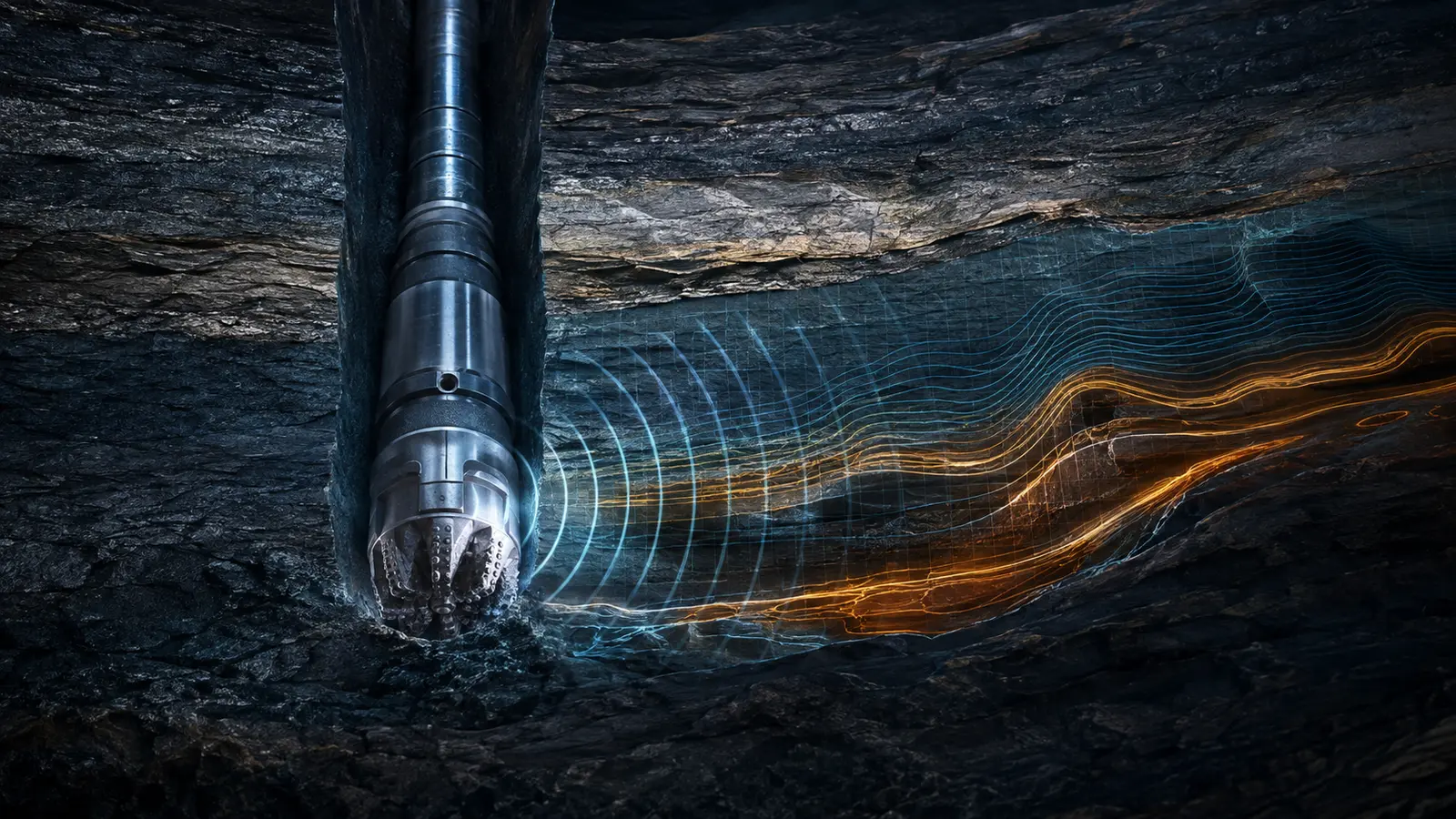
According to the company, DeepWave RF is intended to integrate software-defined radio, a near-bit radio-frequency antenna, adaptive waveform control, edge processing and AI-assisted hybrid inversion in a single subsurface sensing workflow.
The proposed system is designed to help estimate geological features ahead of a drill bit, including fractures, formation boundaries, voids, gas anomalies, fluid contacts, rock changes and mineralized structures. VisionWave said potential applications could extend beyond drilling to geothermal, mineral exploration, groundwater and archaeological work.
Why this matters
Moving from a provisional filing to a non-provisional application is an intellectual-property milestone because it preserves the claimed priority date while placing the application into the examination process. The filing also supplies a specific application number that investors can use to follow the record as it develops.
If the proposed architecture can produce reliable look-ahead information in field conditions, it could address an important operational problem: subsurface decisions are often made with incomplete information. That potential remains to be demonstrated through engineering, testing and commercial adoption.
Industry and company context
DeepWave RF is described as a hybrid sensing and interpretation stack rather than a single detector. The radio-frequency hardware would collect signals near the drill bit, while edge computing and adaptive waveforms would support rapid processing closer to the point of measurement.
The company also refers to physics-informed neural networks and inversion methods constrained by Maxwell’s equations. In practical terms, the concept is intended to combine measured signals with physical rules so an AI model does not rely only on statistical pattern matching.
The filing adds a subsurface-sensing program to VisionWave’s broader portfolio of proposed sensing, communications and autonomous-system technologies.
How to evaluate the update
The application number and priority claim are verifiable filing milestones. The broader performance claims, however, should be evaluated separately from the patent process because patentability does not establish field accuracy, product readiness or commercial demand.
Useful evidence would include controlled test results, independent validation, comparisons with established logging or imaging methods, and quantified performance across different geological and conductivity conditions.
Execution and risk considerations
The U.S. Patent and Trademark Office may narrow or reject claims during examination, and there is no assurance that a patent will issue. Even an issued patent would not, by itself, demonstrate that the platform can be engineered economically or deployed at scale.
VisionWave stated that sensing range and resolution are expected to vary with geology, conductivity, antenna coupling, noise and operating conditions. The platform remains under development, so timelines, cost and commercialization pathways are not yet established.
What to watch next
- Publication of the application and any subsequent examination documents.
- Prototype or field-test data showing look-ahead range, resolution and error rates.
- Independent technical validation or development partners.
- Evidence of a defined product, regulatory pathway and commercial customer use case.
Cornerstone perspective
The filing is a concrete intellectual-property step, but the investment significance will depend on evidence that DeepWave RF can move from a described architecture to repeatable field performance.
For now, the most useful distinction is between what has occurred—the non-provisional application—and what remains prospective: patent issuance, technical validation, product development and commercial adoption.
This article is informational and is not investment advice or a recommendation to buy or sell securities. Forward-looking statements involve risks and uncertainty. Readers should review the original source and report factual concerns through our corrections page.