
Cornerstone Marketing Inc. has a commercial relationship with this company. This newsroom report is provided as part of that broader relationship; no separate publication fee is charged for an individual newsroom article. The commercial relationship does not remove our sourcing, byline, date, correction or disclosure requirements.
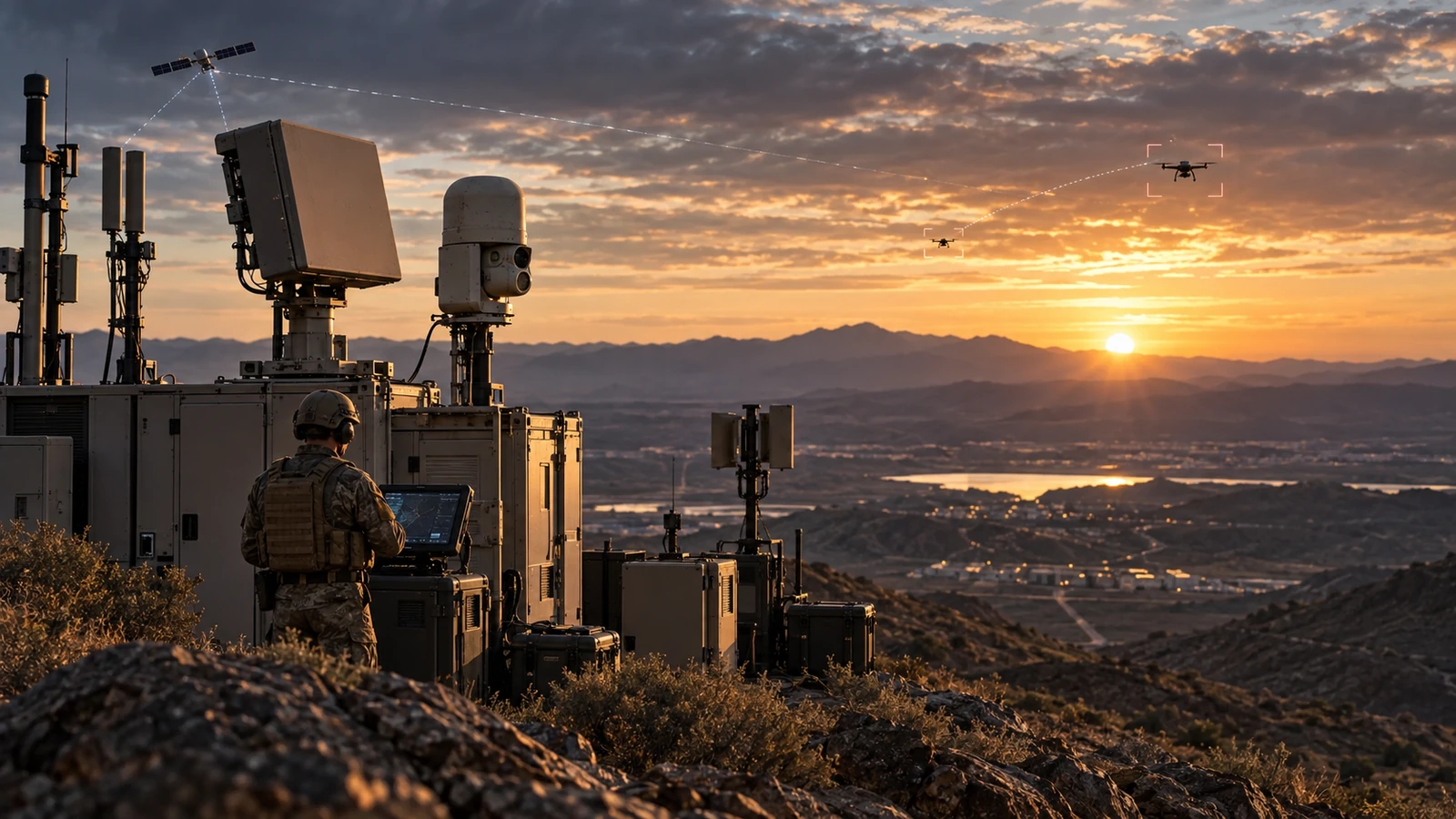
- VisionWave announced the filing of U.S. provisional patent application No. 64/111,834 covering GhostSight™, a hybrid passive-radar and radio-frequency sensing architecture.
- The proposed system is designed to combine ambient RF signals with VisionWave-controlled cooperative illumination sources. According to the company, the architecture may support object detection, classification, tracking and situational awareness in environments where conventional radar may be constrained.
- The filing adds a sensing-focused technology to VisionWave's growing intellectual-property portfolio.
The development
VisionWave announced the filing of U.S. provisional patent application No. 64/111,834 covering GhostSight™, a hybrid passive-radar and radio-frequency sensing architecture.
The proposed system is designed to combine ambient RF signals with VisionWave-controlled cooperative illumination sources. According to the company, the architecture may support object detection, classification, tracking and situational awareness in environments where conventional radar may be constrained.
The filing adds a sensing-focused technology to VisionWave's growing intellectual-property portfolio.
Why this matters
This development gives VisionWave Holdings, Inc. a new milestone within its focus on aI-enabled defence technology, sensing, communications and autonomous systems. Its importance rests on whether it improves execution visibility, advances a defined program or strengthens the foundation for the company’s next phase.
A technology milestone can widen the company’s opportunity set, but commercial value depends on validation, intellectual-property scope, interoperability, customer requirements and the ability to manufacture or deploy the system reliably.
The next evidence should show movement beyond the announcement itself. Demonstrations, independent testing, customer evaluations, integration milestones, manufacturing readiness and commercial terms will determine whether the technology can become repeatable revenue.
Industry and company context
For $VWAV, the next comparison point will be the evidence that follows. Consistency between this announcement, future results and the company’s stated timetable will matter more than the initial headline in isolation.
Defence technology moves from concept to revenue through validation, interoperability testing, field evaluation, customer qualification and procurement. Technical capability and commercial timing therefore need to be assessed separately.
Patents, distribution agreements and acquisitions can broaden an opportunity set, but investors still need evidence that the pieces work together, address a defined customer requirement and can be delivered at an acceptable cost and schedule.
How to evaluate the update
Technology announcements are strongest when performance claims are tied to test conditions, measurable specifications and a defined user requirement. The distinction between a concept, prototype, validated system and commercial product should remain clear.
Commercial readiness also requires manufacturing, cybersecurity, support, procurement and integration planning. A technically promising system can still face delays if those surrounding capabilities are not developed at the same pace.
Execution and risk considerations
Defence programs can face long procurement cycles, security requirements, export controls, customer testing and integration risk. A capable technology may still require substantial time and capital before a contract produces recognized revenue.
Acquisitions and partnerships add coordination risk. Intellectual property, personnel, supply chains and customer relationships must be integrated without weakening delivery or increasing costs beyond the expected benefit.
What to watch next
- Independent testing and validation against stated performance targets.
- Movement from development into defined customer evaluations or procurement paths.
- Patent prosecution, integration work and manufacturing readiness.
- Commercial terms, delivery schedules and evidence of repeatable demand.
Cornerstone perspective
Seen against VisionWave Holdings, Inc.’s broader strategy, this is best understood as a technology milestone rather than a standalone headline. The announcement establishes the reference point; execution will determine how much lasting value it creates.
Technology value emerges through performance, integration and adoption. Intellectual property and product claims can define an opportunity, while testing, customer validation and repeatable delivery establish whether that opportunity can become a business.
This article is informational and is not investment advice or a recommendation to buy or sell securities. Forward-looking statements involve risks and uncertainty. Readers should review the original source and report factual concerns through our corrections page.