This article was selected without issuer payment or pre-publication approval and prepared under Cornerstone Market Intelligence editorial standards. The source material used is linked on this page.
- Apex Critical Metals has extended the Trinity Zone about 200 metres west with new Rift Project drilling, including 116.0 metres at 3.55% REO and 171.5 metres at 2.35% REO.
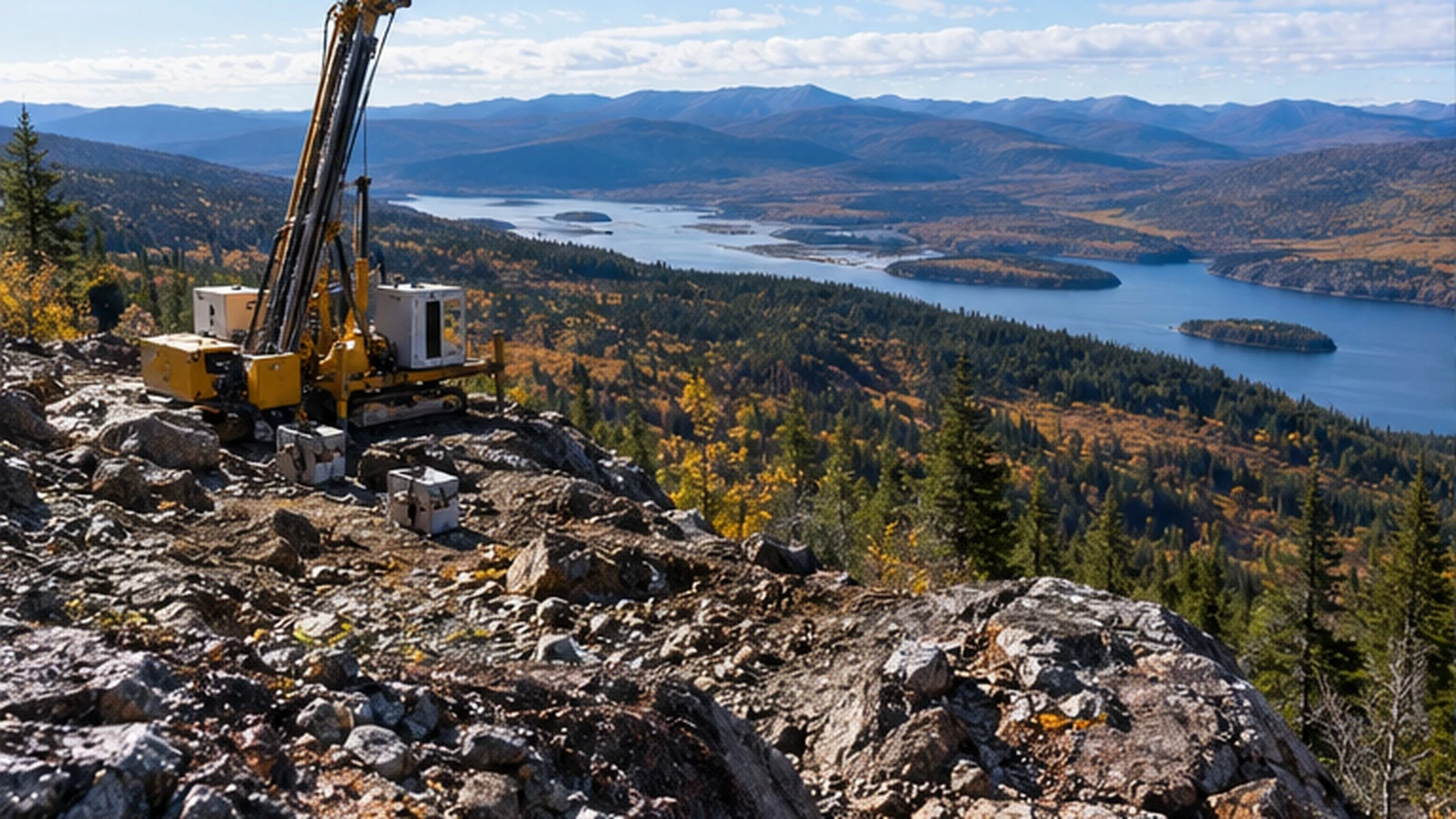
- Apex Critical Metals’ latest step-out drilling at the Rift Rare Earth Project has pushed the Trinity Zone roughly 200 metres farther down-dip to the west while adding two of the strongest broad rare-earth intervals reported from the 2026 campaign. The Nebraska project sits within the Elk Creek Carbonatite Complex and is the company’s principal U.S. rare-earth asset.
- Hole RIFT26-024 returned 116.0 metres grading 3.55% rare earth oxide, including 22.9 metres at 4.75% REO. Nearby RIFT26-022 returned 171.5 metres at 2.35% REO, including 37.0 metres at 4.07% REO. Apex says those are the longest intervals above 4.00% REO reported from Rift to date and support an emerging higher-grade core inside the broader Trinity mineralized envelope.
The development
Apex Critical Metals’ latest step-out drilling at the Rift Rare Earth Project has pushed the Trinity Zone roughly 200 metres farther down-dip to the west while adding two of the strongest broad rare-earth intervals reported from the 2026 campaign. The Nebraska project sits within the Elk Creek Carbonatite Complex and is the company’s principal U.S. rare-earth asset.
Hole RIFT26-024 returned 116.0 metres grading 3.55% rare earth oxide, including 22.9 metres at 4.75% REO. Nearby RIFT26-022 returned 171.5 metres at 2.35% REO, including 37.0 metres at 4.07% REO. Apex says those are the longest intervals above 4.00% REO reported from Rift to date and support an emerging higher-grade core inside the broader Trinity mineralized envelope.
The western step-outs also add scale to the current interpretation. Apex now traces Trinity mineralization across about 500 metres of north-south strike and more than 300 metres of western down-dip extension inside a larger 700-metre target corridor. The two main east-west drill fences span roughly 600 metres and are showing mineralization between and beyond the fences.
The latest holes build directly on earlier 2026 drilling rather than opening an unrelated target. Apex previously reported RIFT26-012 at 151.4 metres of 2.42% REO, including 26.0 metres at 3.40% REO. The new results extend that higher-grade western geometry and give the company additional data for the three-dimensional model it is building around Trinity.
Southern holes are also adding definition. RIFT26-023 returned 48.9 metres at 1.82% REO, including 8.5 metres at 2.66% REO, while RIFT26-020 and RIFT26-021 intersected additional rare-earth mineralization farther south. Together, the holes are helping Apex test both the grade distribution and the geometry of the mineralized body across multiple drill fences.
Apex has completed approximately 37 holes totaling about 24,000 metres at Rift, with assays for 13 holes representing roughly 8,000 metres still pending. Drilling remains active into the fourth quarter, giving the company a substantial batch of new data still to be incorporated into the project model.
The next major technical milestone is the inaugural mineral resource estimate, which Apex says remains targeted for completion before the end of the first quarter of 2027. Current drilling is prioritizing the eastern extent of Trinity while the pending western results continue to test how much farther the zone may extend.
Rift is one of two critical-mineral projects in Apex’s North American portfolio. The company also controls the Cap Project in British Columbia, where prior drilling identified niobium mineralization. For Rift, however, the 2026 program is increasingly centered on converting a broad rare-earth target into a better-defined, continuously modeled zone ahead of that first resource estimate.
Why this matters
The latest step-outs strengthen the continuity case at Trinity by extending the higher-grade western geometry rather than simply adding isolated mineralized intervals.
With roughly 24,000 metres drilled and a large assay backlog still pending, Apex is entering the resource-definition stage with materially more subsurface information than it had earlier in the year.
Industry and company context
Apex describes Rift as a rare-earth project within Nebraska’s Elk Creek Carbonatite Complex, a geological setting that has also attracted attention for niobium and other critical minerals.
The company’s stated near-term objective is to combine the 2026 drilling into an inaugural mineral resource estimate by the end of Q1 2027.
How to evaluate the update
The most useful test of the October 5 results will be whether pending holes preserve the same west-plunging geometry and broad REO envelope across additional sections.
The resource estimate will provide the first project-wide framework for comparing grade, tonnage and continuity across the Trinity Zone rather than evaluating each drill hole separately.
Execution and risk considerations
Reported intervals are downhole core lengths, so the eventual geological model will be important for interpreting true thickness and the relationship between the higher-grade core and the wider mineralized envelope.
Apex still has 13 completed holes awaiting assays, making the pending dataset a meaningful part of the next technical update rather than a minor follow-up.
What to watch next
- Assays from the roughly 8,000 metres of completed drilling still pending.
- Eastern step-out results along the two principal drill fences.
- Updated three-dimensional interpretation of Trinity’s higher-grade core.
- The inaugural Rift mineral resource estimate targeted before the end of Q1 2027.
Cornerstone perspective
The notable part of this update is the combination of grade and geometry. Broad intervals above 2% REO are being paired with longer sections above 4% REO while the zone continues to expand westward.
If the pending holes continue to connect those higher-grade intervals, the 2026 campaign will have done more than add metres: it will have materially sharpened the shape of the resource Apex intends to quantify next.
This article is informational and is not investment advice or a recommendation to buy or sell securities. Forward-looking statements involve risks and uncertainty. Readers should review the original source and report factual concerns through our corrections page.