This article was selected without issuer payment or pre-publication approval and prepared under Cornerstone Market Intelligence editorial standards. The source material used is linked on this page.
- RUA Gold reported new high-grade gold-antimony intersections at Auld Creek as four drill rigs continue resource work ahead of a Q4 2026 mineral resource update and December PFS target.
- RUA Gold’s latest Auld Creek drilling has added another set of high-grade gold-antimony intersections while four rigs continue to work toward an updated mineral resource estimate in the fourth quarter. The project is in the Reefton Goldfield on New Zealand’s South Island, where RUA is advancing both resource definition and the technical work required for its development pathway.
- Among the standout results, hole ACDDH127 returned 6.6 metres grading 10.5 g/t gold and 6.7% antimony, with a 3.6-metre reported true width. Inside that interval, a 0.3-metre section returned 43.6 g/t gold and 33.3% antimony. Hole ACDDH130 returned 6.3 metres at 13.7 g/t gold and 0.3% antimony, including 0.3 metres grading 69.2 g/t gold.
The development
RUA Gold’s latest Auld Creek drilling has added another set of high-grade gold-antimony intersections while four rigs continue to work toward an updated mineral resource estimate in the fourth quarter. The project is in the Reefton Goldfield on New Zealand’s South Island, where RUA is advancing both resource definition and the technical work required for its development pathway.
Among the standout results, hole ACDDH127 returned 6.6 metres grading 10.5 g/t gold and 6.7% antimony, with a 3.6-metre reported true width. Inside that interval, a 0.3-metre section returned 43.6 g/t gold and 33.3% antimony. Hole ACDDH130 returned 6.3 metres at 13.7 g/t gold and 0.3% antimony, including 0.3 metres grading 69.2 g/t gold.
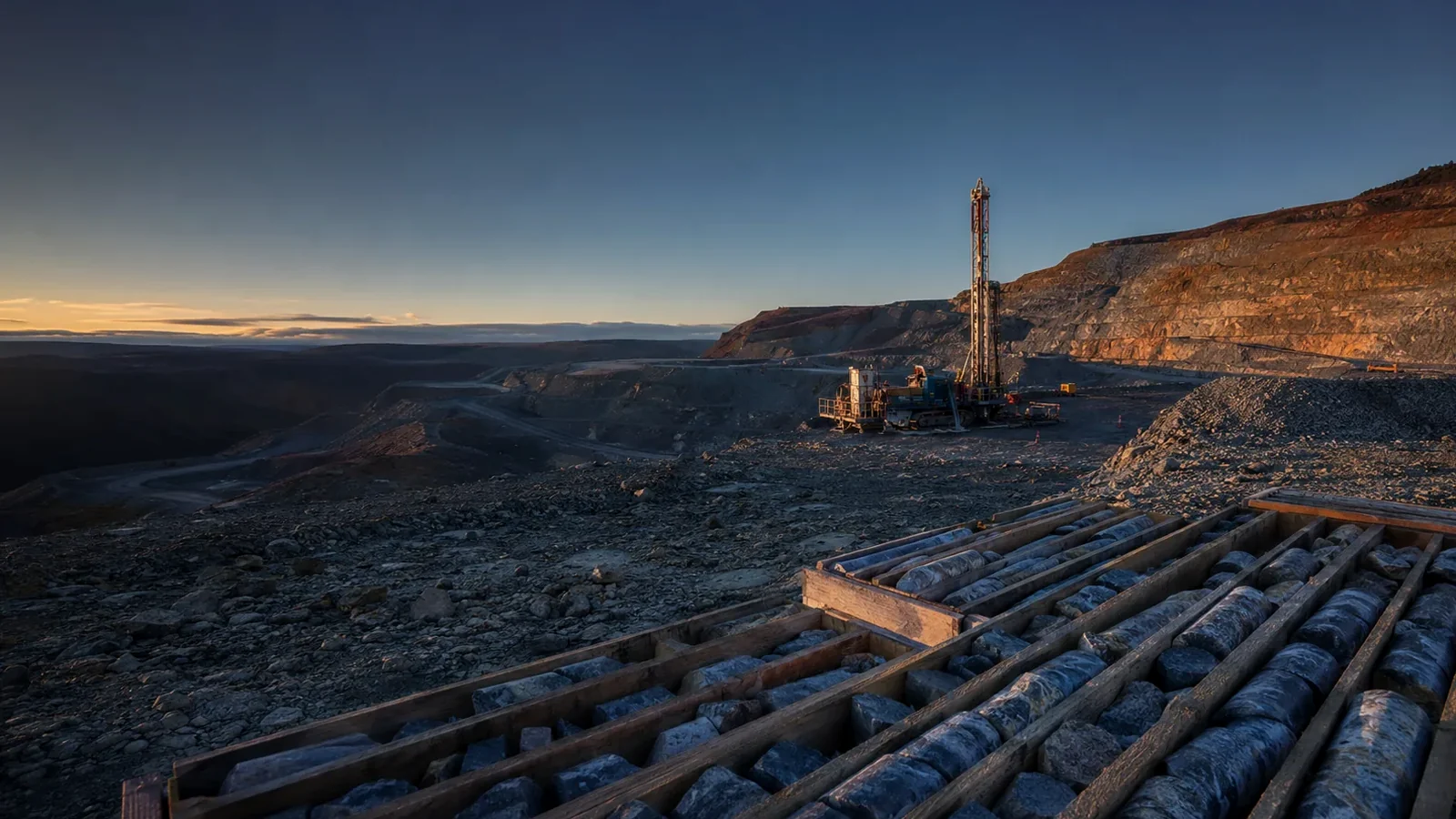
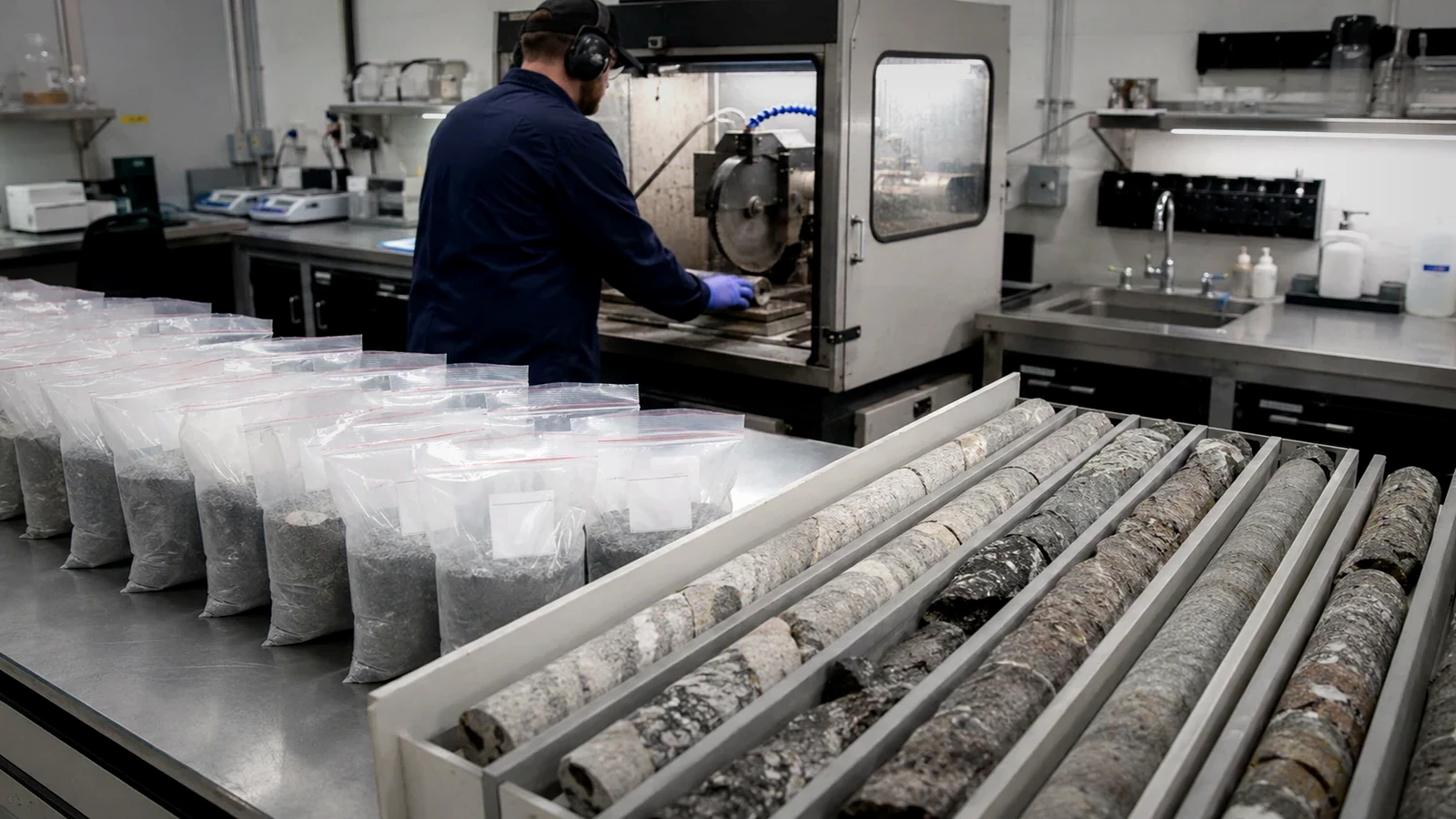
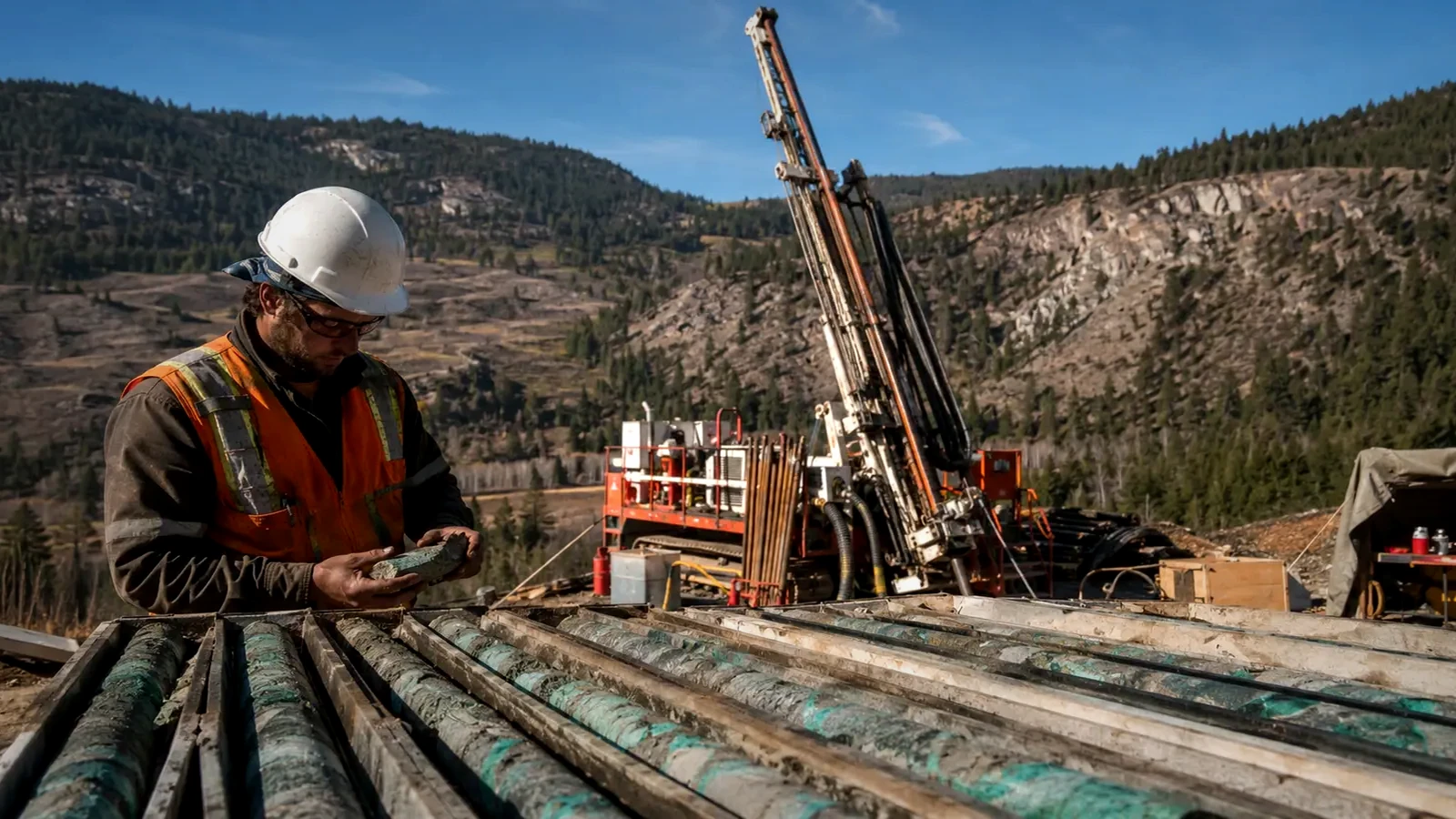
The broader batch also includes ACDDH121 at 11.7 metres grading 4.1 g/t gold and 0.4% antimony, and ACDDH123A at 2.2 metres grading 10.3 g/t gold and 11.3% antimony. RUA continues to report visible gold in drill core, adding a visual geological marker alongside the laboratory assays.
More important for the resource model, the company says drilling is continuing to confirm a repeating sequence of shallow-to-moderately north-dipping mineralized shoots. Those shoots are appearing at roughly 40- to 60-metre intervals at depth, providing a clearer framework for infill drilling and potential extensions.
The Fraternal structure that hosts the Auld Creek mineralization has now been drill-confirmed for more than 1,400 metres northward and intercepted at depths beyond 500 metres. RUA says current drilling is pushing north to extend the mineralized body, with additional depth potential scheduled to be tested during the fourth quarter.
Resource conversion is also moving forward. RUA reports that more than 70% of the inferred material targeted by current drilling is converting to indicated classification, with the ratio improving as successful infill holes are completed. That matters because the same drilling is supporting geotechnical, hydrological, metallurgical and ore-characterization work required for the next study stage.
Auld Creek was accepted into New Zealand’s Fast-Track Approvals process earlier this year. RUA says it remains on schedule to submit its substantive application in October and to publish a pre-feasibility study in December 2026, giving the current drill campaign a direct link to both permitting and engineering milestones.
RUA also controls a broader New Zealand portfolio that includes its Reefton land position and the Glamorgan Project on the North Island. For the near term, though, Auld Creek is the center of activity: four rigs, an updated resource targeted this quarter, a Fast-Track application in October and a PFS targeted before year-end.
Why this matters
The new assays matter because they arrive inside a resource-definition program that is already testing continuity, classification and technical inputs for the planned pre-feasibility study.
Four active rigs give RUA the ability to work on infill conversion and extensions at the same time, compressing several resource-development tasks into the same quarter.
Industry and company context
RUA is focused on high-grade gold projects in New Zealand, with Auld Creek in the Reefton Goldfield currently carrying the company’s most visible development timetable.
Auld Creek’s Fast-Track pathway, planned Q4 resource update and targeted December PFS mean drilling results can be assessed against clearly stated near-term milestones.
How to evaluate the update
The key technical question is whether the repeating mineralized shoots remain consistent as drilling advances northward and deeper along the Fraternal structure.
The updated mineral resource estimate will show how the latest infill and extension holes change both resource confidence and the overall scale of the modeled system.
Execution and risk considerations
The company reports true-width estimates for several highlighted holes, which helps place the headline intervals into the geometry of the mineralized shoots.
The current program also includes geotechnical, hydrological and metallurgical work, so the next study milestones will depend on integrating more than assay data alone.
What to watch next
- The updated Auld Creek mineral resource estimate targeted for Q4 2026.
- Submission of the substantive Fast-Track Approvals application in October.
- Additional northward and deeper drilling on the Fraternal structure.
- The pre-feasibility study targeted for December 2026.
Cornerstone perspective
Auld Creek is moving through multiple development layers at once: high-grade drilling, resource conversion, permitting preparation and PFS-level technical work.
The October 5 results strengthen that sequence by adding new high-grade intersections while the company is already working toward near-term resource and engineering deliverables.
This article is informational and is not investment advice or a recommendation to buy or sell securities. Forward-looking statements involve risks and uncertainty. Readers should review the original source and report factual concerns through our corrections page.